

Repairing slab leaks and concrete cracks is not a one-size-fits-all job. The right repair depends on what caused the crack and whether it is affecting the structural integrity of the building or simply allowing water to enter.
For South East Queensland coastal homes and commercial properties, accurate diagnosis is the first step in any effective waterproofing or leak repair solution.
Structural vs. Non-Structural Cracks
Before choosing an injection method, you must identify the nature of the failure.
| Feature | Structural Cracks
Because they can affect the strength and stability of the building, structural cracks need a repair method that restores the concrete’s load-bearing performance. |
Non-Structural Cracks
Even though they may not be structural, they can still allow water ingress, damp issues, and in some cases create a pathway for gases such as radon. In waterproofing terms, these cracks still need to be sealed properly to prevent ongoing leaks and moisture damage. |
| Cause | Soil settlement, overloading, or poor design. | Concrete shrinkage, thermal expansion, or “curing” stress. |
| Appearance | Wide (>3mm), stair-step patterns, or horizontal lines. | Thin “hairline” cracks, typically random or vertical. |
| Risk | Can lead to wall collapse or shifting foundations. | Primarily causes water seepage and aesthetic issues. |
| Repair Goal | To “weld” the concrete back together for strength. | To create a flexible, watertight seal. |
Choosing the Right Concrete Crack Injection Method
Concrete Crack Injection for Lasting Slab Repairs on the Gold Coast
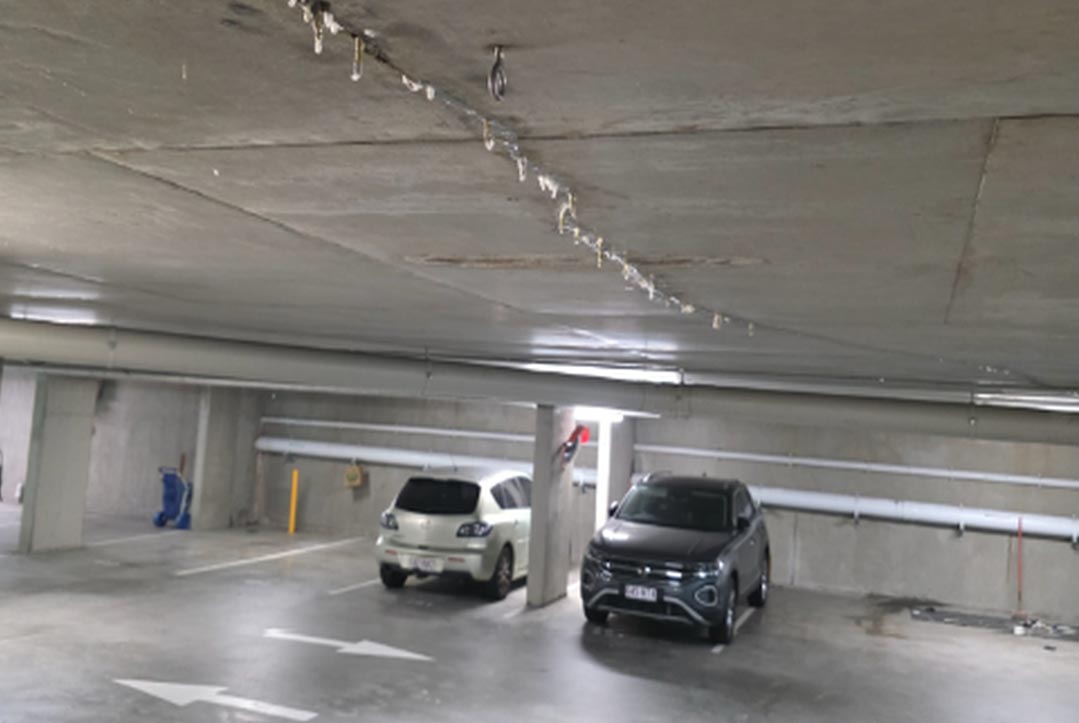
Injection is the preferred method for repairing slab and foundation cracks because it treats the problem at its source. Instead of covering the surface, it fills the full depth of the crack, restoring integrity and delivering long-term waterproofing protection.
Epoxy Injection for Structural Crack Repairs
Epoxy injection is the go-to solution when the concrete needs to regain its structural strength. Once cured, epoxy forms a rigid, high-strength bond that effectively “welds” the concrete back together.
How the process works:
Injection ports are installed along the crack, and a two-part epoxy resin is applied under controlled, low pressure. The application starts at the lowest point and progresses upward, ensuring complete penetration through the slab.
Best suited for:
- Dry structural cracks
- Cracks where movement has stabilised
- Load-bearing concrete requiring strength restoration
Things to consider:
Epoxy is extremely strong but not flexible. If there is ongoing movement in the slab or foundation, new cracks may develop alongside the repaired area.
Polyurethane Injection for Leak Sealing
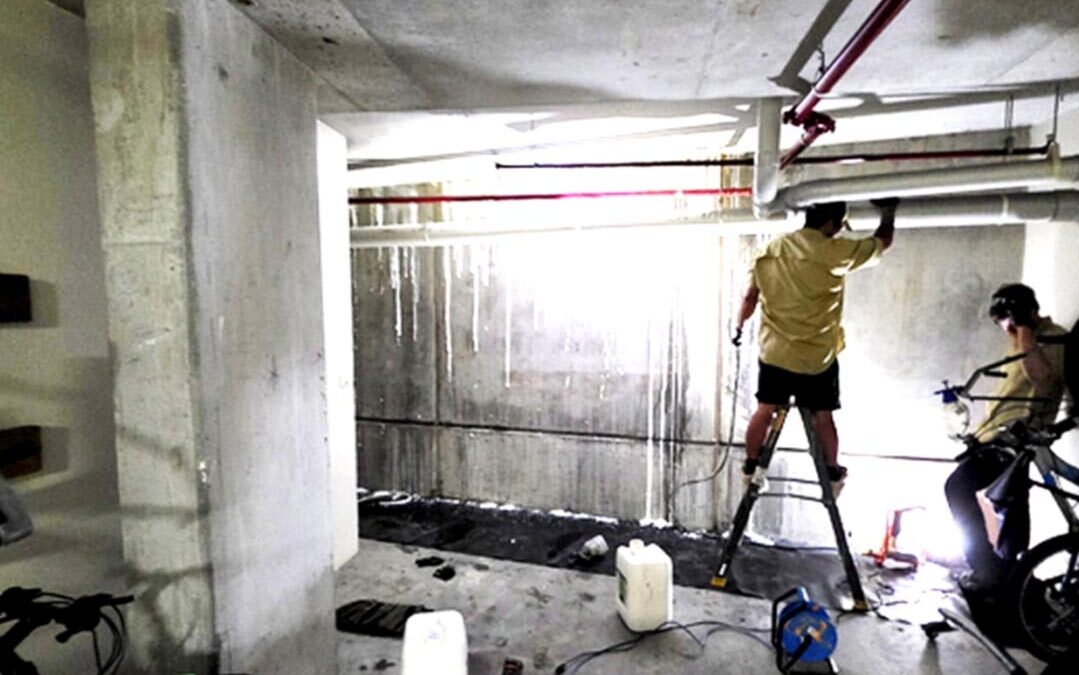
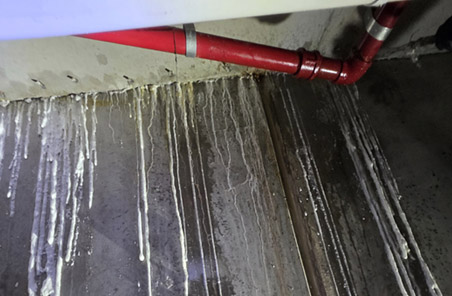
Polyurethane injection is widely used in Gold Coast waterproofing for stopping active leaks and sealing non-structural cracks. This expanding resin reacts with moisture, allowing it to seal even the finest gaps and stop water ingress effectively.
How the process works:
Injection ports are installed in a similar way to epoxy repairs. Once injected, the polyurethane expands rapidly—often up to 20 times its original volume—filling voids and forcing water out of the crack.
Best suited for:
- Wet or actively leaking cracks
- Hairline fractures and slab joints
- Basement and below-ground leak repairs
Key advantage:
Polyurethane remains flexible after curing, making it ideal for areas exposed to temperature changes or slight structural movement. This flexibility helps maintain a watertight seal over time without cracking or failing.
Professional Crack Injection Process for Slab Repairs
No matter the material used, effective slab crack repairs rely on a proven, step-by-step injection process. This ensures the crack is fully sealed, structurally sound (if required), and protected against future water ingress—especially important for Gold Coast waterproofing conditions.
1. Crack Preparation and Cleaning
The first step is preparing the crack properly. All loose debris, dust, and efflorescence (white salt deposits) are removed to ensure the injection resin bonds directly to the concrete. Proper cleaning is critical for long-term performance and adhesion.
2. Injection Port Installation
Injection ports, also known as packers, are installed along the length of the crack at regular intervals—typically every 150mm to 300mm. These ports allow for controlled, even distribution of the resin throughout the full depth of the slab.
3. Surface Sealing
The exposed face of the crack between each port is sealed using a fast-setting epoxy paste. This step prevents the resin from escaping during injection and ensures pressure is directed into the crack for maximum penetration.
4. Controlled Resin Injection
The selected resin—either epoxy for structural crack repairs or polyurethane for waterproofing and leak sealing—is injected through the ports.
For structural repairs, low-pressure injection is used to allow the resin to fully penetrate without causing further damage or “blowouts.” This ensures the crack is filled completely from the inside out.
5. Finishing and Surface Restoration
Once the resin has fully cured, the injection ports are removed. The surface is then ground smooth, leaving a clean, professional finish that blends seamlessly with the surrounding concrete.
When to Call for a Concrete Crack Injection Professional
While DIY concrete crack injection kits are available, some situations require expert assessment and professional waterproofing solutions—especially for long-term performance in Gold Coast conditions.
You should contact a professional if:
- The crack is wider than 6mm
Larger cracks often indicate deeper structural or foundation issues that need more than a surface-level fix. - The crack runs through both sides of the slab
If it’s visible internally and externally, the crack likely extends through the full thickness of the concrete and requires proper injection repair. - There is noticeable movement or “heaving”
When one side of the crack sits higher than the other, it’s a clear sign of slab movement or foundation shift. - Water is actively flowing through the crack
Gushing or heavy water ingress points to significant waterproofing failure that needs immediate professional attention.
Structural Issues Should Be Assessed First
If there’s any indication of structural damage, it’s essential to consult SSRemedial waterproofing specialists before starting repairs. Addressing the underlying cause—such as soil movement or load stress—is critical to preventing recurring cracks.
For reliable Gold Coast waterproofing, leak detection, and slab crack repairs, professional diagnosis ensures the right repair method is used—saving time, money, and future damage.