
Introduction
Efflorescence is a common yet often misunderstood phenomenon in masonry construction. It manifests as a white, powdery deposit on surfaces such as concrete, brick, and pavers. While primarily aesthetic, efflorescence on brick walls or floors can signal deeper moisture-related issues that compromise durability and performance.
This article examines the causes, effects, and solutions of efflorescence, highlighting practical examples such as efflorescence on concrete slabs, efflorescence in garage floors, efflorescence on brick walls, efflorescence on concrete floors, efflorescence on pavers, and the role of efflorescence salts in its formation.
What is Efflorescence?
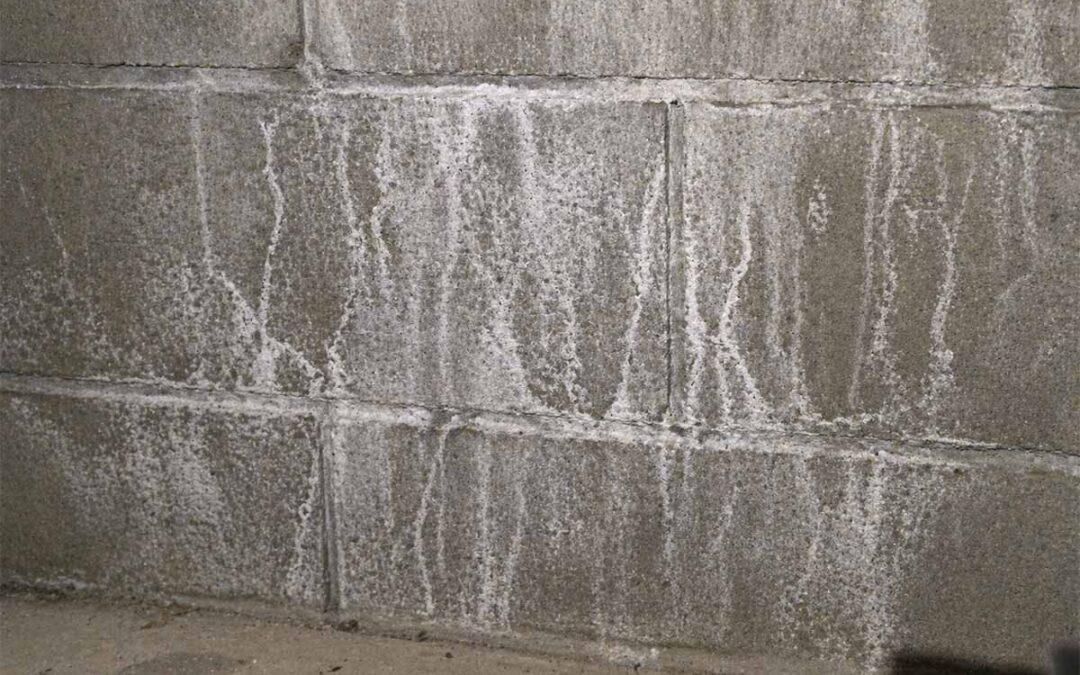
Efflorescence is the migration of water-soluble salts to the surface of porous building materials. When moisture travels through concrete or brick, it dissolves salts within the matrix. As the water evaporates, these salts crystallize on the surface, appearing as chalky white stains. The primary culprit is efflorescence salt, which includes compounds such as calcium sulfate, sodium carbonate, and potassium nitrate.
Although concrete efflorescence does not directly weaken structural integrity, its presence indicates pathways for moisture ingress, which can lead to long-term deterioration if ignored.
Causes of Efflorescence
Efflorescence requires three conditions: soluble salts, moisture, and pathways for migration.
1. Presence of Salts
Concrete and brick naturally contain salts from raw materials and additives.
Efflorescence concrete slab often arises when cement hydration releases calcium hydroxide, which reacts with atmospheric carbon dioxide to form calcium carbonate deposits.
2. Moisture Availability
- Rain, groundwater, or condensation provides the vehicle for salt migration.
- Efflorescence in garage floor is common due to vehicles bringing in water and road salts, which penetrate porous concrete.
3. Migration Pathways
- Capillary action draws water upward through pores and cracks.
- Efflorescence in walls occurs when rising damp transports salts from foundations into masonry.
Without moisture, salts remain dormant; without salts, moisture leaves no deposits. Efflorescence is therefore a symptom of combined material and environmental factors.
Rising Damp Treatment
Stop or remove the source of efflorescence on brick wall with the help of SSR rising damp professional. Protect your property and restore durability today.
Key Signs of Efflorescence in Your Properties
Signs of efflorescence are fairly easy to spot once you know what to look for. It’s essentially the visible evidence of moisture moving through porous materials like concrete, brick, or stone and leaving behind salts. Here are the most common indicators:
- White, powdery deposits: Chalk-like residue on surfaces, often mistaken for dust.
- Crystalline patches: Sometimes the salts form small, sparkly crystals rather than a uniform powder.
- Recurring stains: Even after cleaning, the deposits return if moisture pathways remain.
- Moisture association: Appears on damp areas such as basement walls, garage floors, or exterior pavers.
- Surface discoloration: White streaks or blotches that contrast with the natural color of brick or concrete.
- Structural clues: Accompanied by peeling paint, crumbling plaster, or damp patches, especially in walls affected by rising damp.
Effects of Efflorescence
While efflorescence is not structurally destructive, its consequences are significant:
Aesthetic Damage
- White stains diminish the appearance of decorative surfaces such as efflorescence on pavers in landscaping projects.
- Commercial properties suffer reduced curb appeal, affecting value and perception.
Indicator of Moisture Problems
- Persistent efflorescence on walls, floors, garage and pavers suggests inadequate waterproofing or drainage.
- Efflorescence in walls may reveal rising damp, pointing to failed damp-proof courses and required a QBCC-licensed and professional rising damp specialist.
Surface Degradation
- Repeated salt crystallization can cause micro-spalling, weakening finishes.
- In garages, efflorescence in garage floor combined with de-icing salts accelerates concrete wear.
Maintenance Costs
- Removal and prevention require specialized cleaning, sealers, and drainage improvements.
- Ignoring efflorescence leads to recurring treatments and potential structural repairs.
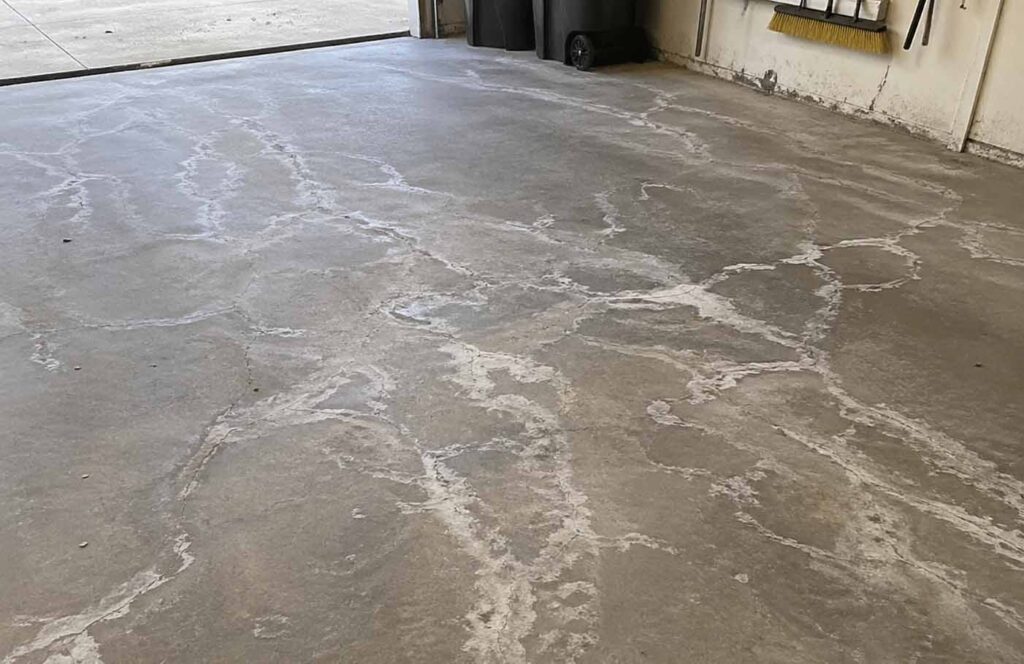
Efflorescence in the garage floor
Case Examples
- Efflorescence Concrete Slab: Large slabs in warehouses often exhibit efflorescence due to ground moisture rising through unsealed joints.
- Efflorescence in Garage Floor: Homeowners frequently notice white patches after winter, caused by melting snow and road salts.
- Efflorescence on Walls: Historic brick buildings show efflorescence when damp-proof courses fail, requiring remedial concrete injection treatments.
- Efflorescence on Pavers: Outdoor patios and driveways are prone to efflorescence, especially when laid on poorly drained bases.
These examples highlight efflorescence as both a cosmetic nuisance and a diagnostic tool for moisture intrusion.
Why Cleaning Efflorescence off Brickwork or Concrete is Not Enough?
Cleaning efflorescence off brickwork is not enough because it only removes the visible crystalline deposits without addressing the underlying causes. Efflorescence forms when moisture migrates through porous masonry, dissolving salts that later crystallize on the surface as the water evaporates. Simply brushing or washing away these deposits may restore appearance temporarily, but the moisture pathways and salt sources remain active. Without correcting drainage, sealing joints, or controlling rising damp, efflorescence will recur, often more aggressively. True remediation requires tackling the root issues—moisture ingress, salt migration, and inadequate waterproofing—rather than focusing solely on surface cleaning.
Solutions to Efflorescence
Efflorescence can be addressed through removal, prevention, and long-term control.
1. Removal Techniques
- Dry Brushing: Light deposits can be brushed away with stiff bristles.
- Water Rinsing: Gentle washing dissolves salts, though recurrence is likely.
- Chemical Cleaners: Mild acidic solutions (e.g., diluted vinegar or proprietary cleaners) dissolve stubborn deposits. Care must be taken to avoid damaging surfaces.
Rising Damp Treatment
Stop or remove the source of block wall efflorescence with the help of SSR rising damp professional. Protect your property and restore durability today.
2. Prevention Strategies
Moisture Control
- Improve site drainage to prevent water pooling around foundations.
- Seal joints in efflorescence concrete slab to block capillary rise.
Surface Sealers
- Apply breathable sealers that repel water while allowing vapor escape.
- Essential for efflorescence on pavers in outdoor settings.
Material Selection
- Use low-alkali cement and washed aggregates to reduce salt content.
- Opt for dense, low-porosity bricks to minimize pathways.
3. Long-Term Control
Structural Waterproofing
- Install or repair damp-proof courses to prevent efflorescence in brick walls. See the details of our rising damp treatment or contact us here.
- Apply tanking systems in basements and garages.
Environmental Management
- Ensure adequate ventilation to reduce condensation.
- Landscape grading to divert water away from structures.
Scholarly Perspective
Efflorescence is not merely a construction defect but a subject of academic interest in materials science. Researchers study salt migration to understand durability, porosity, and moisture transport in cementitious materials. The phenomenon illustrates the interplay between chemistry (salt solubility), physics (capillary action), and engineering (drainage design).
In practice, efflorescence serves as a visible marker of hidden processes. For example, efflorescence salt crystallization patterns can reveal the direction of moisture movement, aiding diagnosis of rising damp or groundwater intrusion. Thus, efflorescence is both a problem and a diagnostic tool.
Conclusion
Efflorescence on concrete and brick is a multifaceted issue. While often dismissed as cosmetic, it signals underlying moisture dynamics that demand attention. Whether appearing as efflorescence concrete slab, efflorescence in garage floor, efflorescence in brick walls, efflorescence on concrete floor, or efflorescence on pavers, the root cause lies in the migration of efflorescence salt through porous materials.
Effective management requires a dual approach: immediate removal for aesthetics and long-term prevention through moisture control, sealing, and structural waterproofing. By understanding efflorescence as both a chemical and environmental process, property owners and construction professionals can safeguard durability, aesthetics, and value.
- Salt Damp and Rising Damp: Why One Treatment Alone Is …
- Concrete Spalling: The Causes, Effects, and Repairs of Spalling
- How to Fix Water Leaks and Prevent Future Damage with …
- Common Misdiagnoses of Rising Damp and Their Costs
- Slab Leakage Solutions: Repairing Structural and Non-Structural Cracks with Injection Methods