
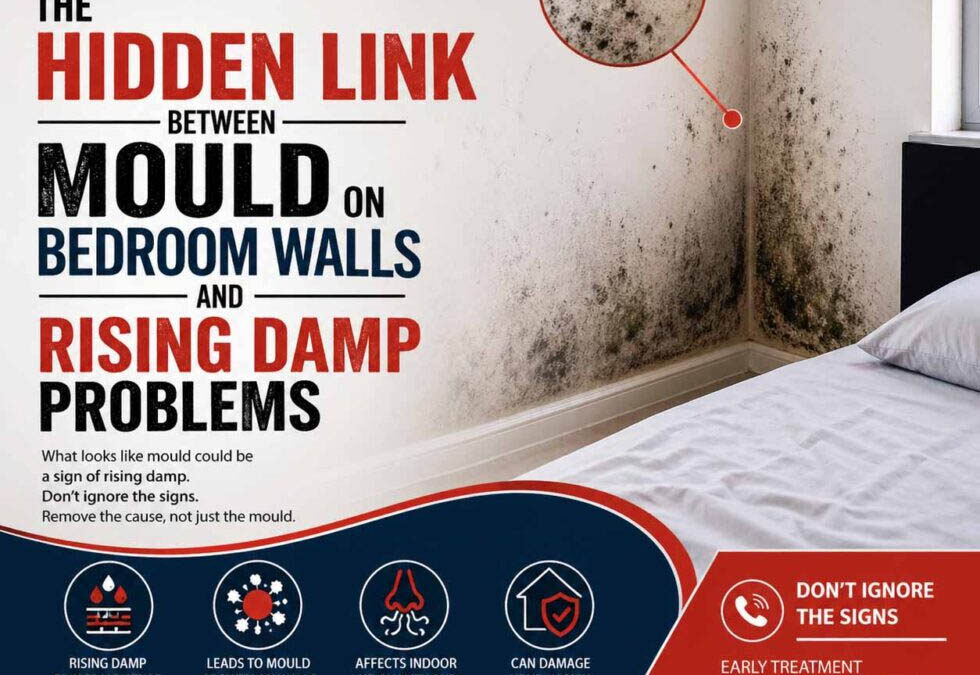
Mould on bedroom walls is easy to dismiss as a ventilation issue, but when it keeps coming back, there may be a deeper moisture problem behind it. In many Gold Coast homes, persistent bedroom mould can be linked to rising damp, especially when mould appears near skirting boards, corners, cupboards, or lower sections of the wall.
Understanding the difference between condensation and rising damp is important. It helps homeowners, landlords, and builders choose the right repair instead of relying on short-term cleaning that does not fix the source of the moisture.
Why Mould Forms in Bedroom Walls
Mould needs moisture, a surface to grow on, and the right temperature. Bedrooms often provide all three. Closed windows, limited airflow, cool external walls, and soft furnishings can all contribute to condensation and mould in bedroom spaces.
However, mould is not always caused by condensation alone. If mould spots on bedroom wall surfaces keep returning after cleaning, or if they appear low on the wall, dealing with rising damp may be involved.
How Rising Damp Causes Bedroom Mould
Rising damp is a building pathology where moisture from the ground travels upward through walls by capillary action. It occurs in porous materials such as brick, stone, mortar, and concrete, allowing groundwater to be absorbed and drawn vertically into the structure. This usually happens when the damp-proof course has failed, is bridged, or was never properly installed.
As moisture rises through the wall, it can carry salts from the ground. These salts may appear as white deposits, staining, bubbling paint, crumbling plaster, or damp patches near the base of the wall. Over time, the wall stays damp enough for mould to grow.
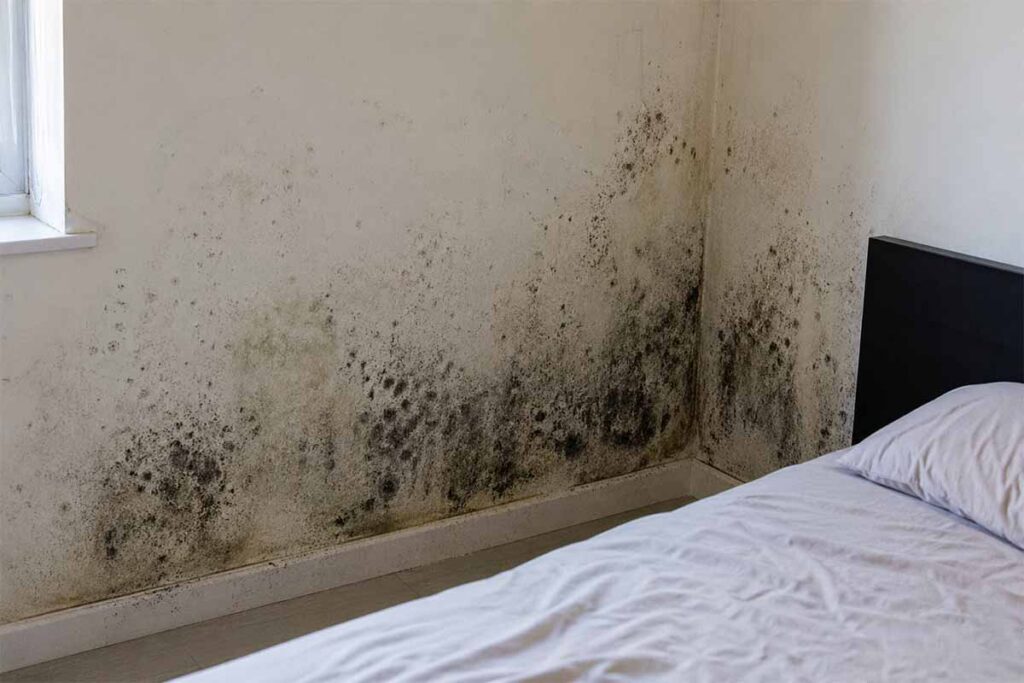
Black mould in corner of bedroom areas, especially near skirting boards or external walls, can be a sign that moisture is coming from within the wall rather than just from the air.
How Rising Damp Happens
Most buildings are constructed with a damp-proof course (DPC)—a barrier designed to prevent ground moisture from rising into walls. Rising salt damp develops when:
- The DPC is missing, damaged, or bridged
- Ground levels outside are too high
- Building materials allow continuous moisture absorption
Water moves upward through tiny pores in the masonry, sometimes reaching heights of up to 1 meter or more, depending on material permeability and evaporation conditions.
Condensation vs Rising Moisture Damp: How to Tell the Difference
Condensation mould often appears on cold surfaces, windows, ceilings, and upper wall areas. It may look like scattered dark spots, especially in rooms with poor ventilation.
Rising salt damp-related mould is usually found lower on the wall. It may appear with tide marks, peeling paint, salt staining, damaged plaster, or damp skirting boards.
Common signs include:
- Mould concentrated near the floor
- Damp or musty smells in the bedroom
- Bubbling paint or flaking plaster
- Salt deposits on walls
- Green mould on bedroom wall areas close to skirting boards
- Mould returning after cleaning
In some homes, both issues happen together. Salt or rising damp adds moisture to the wall, while poor airflow and condensation make surface mould worse.
Mould on Bedroom Walls
Why Mould Appears in Bedroom Cupboards and Wardrobes
Mould in bedroom cupboard spaces or mould in bedroom wardrobe areas is often caused by trapped moisture and poor airflow. Cupboards placed against external or ground-level walls are especially vulnerable.
Because these spaces stay closed for long periods, moisture builds up and creates ideal conditions for mould. If the wall behind the cupboard is affected by rising damp, cleaning the visible mould will not solve the problem.
Why Cleaning Alone Does Not Fix the Issue
Wiping mould away may improve the appearance for a short time, but it does not remove the moisture source. If rising damp is present, the wall will continue absorbing moisture from the ground, and the mould will likely return.
A proper solution requires identifying where the moisture is coming from and repairing the building defect.
Why Mould on Bedroom Walls Should Not Be Ignored?
Rising damp is not just cosmetic—it has structural and health implications:
- Weakens plaster, brickwork, and timber
- Encourages persistent mould growth such as green mould on bedroom wall or mould on bedroom walls and ceilings
- Reduces insulation efficiency
- Can trigger respiratory issues due to mould spores
Professional Rising Damp Treatment
Professional damp inspections help determine whether mould is caused by condensation, leaks, failed waterproofing, or rising damp. Professional rising damp solutions offered by S&S Remedial can help identify and treat moisture at its source through services such as:
- Moisture testing and damp assessments
- Checking for failed or missing damp-proof courses
- Chemical damp-proof course injection
- Salt-resistant render and plaster repairs
- Internal wall restoration
- Long-term moisture prevention advice
This approach treats the cause, not just the visible mould.
How to Prevent Mould from Returning
To reduce the risk of bedroom mould and rising damp problems:
Improve airflow with windows, fans, or ventilation systems
- Keep furniture slightly away from external walls
- Check cupboards and wardrobes regularly
- Maintain drainage around the property
- Make sure ground levels do not bridge the damp-proof course
- Repair damaged plaster, seals, and waterproofing early
- Arrange a professional inspection if damp patches keep returning
Final Thoughts
Mould on bedroom walls is often a warning sign of a larger moisture issue. While condensation is common, persistent mould near lower walls, skirting boards, corners, cupboards, or wardrobes may point to rising damp.
For Gold Coast homeowners, early diagnosis is the best way to protect indoor air quality, prevent plaster and timber damage, and avoid ongoing repairs. Treating rising damp at the source provides a longer-lasting solution than surface cleaning alone.