
When it comes to managing moisture in a building, the right damp proofing approach starts with a clear, practical order of action.
In the remediation and waterproofing industry, the golden rule is simple: begin with the least destructive solution first. More invasive work should only be considered when the issue is structural, ongoing, or when ventilation, drainage, and environmental corrections have failed to solve the problem.
Here’s a clear guide to when non-invasive, minimally invasive, and fully invasive damp proofing solutions are the best fit.
1. Non-Invasive Damp Proofing Solutions (The First Line of Defense)
Non-invasive damp proofing solutions focus on addressing the moisture source without making major structural changes to the building itself. These methods aim to improve drainage, reduce excess moisture, and help the property dry out naturally.
Common Methods
- External Grading: Lowering garden beds, paving, or pathways that sit higher than the internal floor level and create “bridging” over the original damp-proof course (DPC).
- Drainage Corrections: Repairing damaged downpipes, clearing blocked gutters, and installing French drains to redirect water away from the property.
- Ventilation Management: Improving airflow by clearing blocked subfloor vents and installing extraction fans in bathrooms, laundries, and other moisture-prone areas.
- Breathability Restorations: Removing non-breathable cement renders or plastic-based masonry paints and replacing them with breathable lime-based finishes that allow trapped moisture to escape naturally as one of the best non-chemical damp proofing method.
When to Use Non-Invasive or Chemical-Free Damp Proofing
Heritage & Historic Properties
Non-invasive damp proofing are ideal for heritage and older-style buildings constructed with solid brick, stone, and lime mortar before the mid-20th century. These properties are designed to naturally absorb and release moisture, so introducing physical damp-proof barriers can often trap moisture and lead to further damage.
Penetrating Damp Caused by Building Defects
These methods are effective when moisture issues are linked to external defects such as leaking roofs, damaged window flashings, cracked render, or broken plumbing. Addressing the source of water ingress is often the most effective long-term solution.
Condensation-Related Moisture Problems
Non-invasive damp treatments or non-chemical damp proofing are also recommended when condensation is caused by poor airflow and ventilation rather than rising damp. Improving ventilation, reducing humidity, and increasing airflow can significantly reduce internal moisture build-up and mould growth.
2. Minimal Invasive Damp Proofing Solutions (The Targeted Barrier)
Minimally invasive damp proofing solutions involve targeted rising or salt damp treatments within the building structure to control moisture intrusion without major structural alterations. These methods introduce specialised chemical or resin-based barriers injected directly into affected materials while preserving the overall integrity of the property.
Designed to stop moisture movement at its source, these minimal invasive damp proofing is commonly used when non-invasive methods alone are not enough to resolve persistent moisture or damp issues.
Common Methods
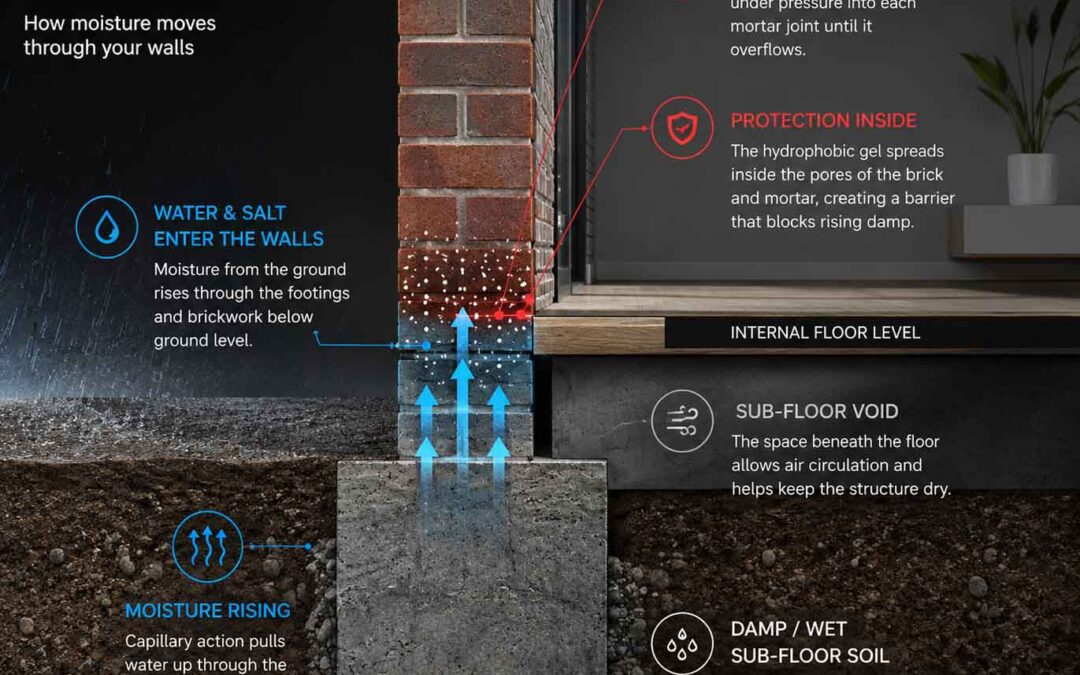
- Chemical DPC Injection: Small holes are drilled into the mortar joints at regular intervals, typically around 10–12mm in diameter, before injecting specialised silane or siloxane creams designed to create a water-repellent damp-proof course (DPC).
- Pressure Resin Injections: Used for active leaks and structural cracks in basements or concrete foundations, this method involves injecting expanding polyurethane or epoxy resins into the affected area to seal cracks internally and prevent further water ingress.
When to Use Minimal Invasive Damp Solutions
Modern Cavity Wall Construction
These solutions are commonly used in modern homes built with concrete slabs, hard cement mortars, and gypsum-based plasters where the original damp-proof course has failed, deteriorated, or was never properly installed.
True Rising Damp
Minimally invasive damp treatments are suitable when groundwater is actively travelling upward through masonry via capillary action and external drainage improvements alone cannot stop the vertical movement of moisture from the ground.
Localised Sub-Surface Water Ingress
These methods are also effective for targeted waterproofing repairs in basements, cellars, retaining walls, and lift pits where water is entering through isolated structural cracks or weak points in the concrete.
3. Invasive Solutions (The Heavy Structural Rebuild)
Invasive solutions involve major structural work to physically block or redirect severe water ingress. These methods typically require excavation, demolition, or extensive rebuilding to install permanent waterproofing systems and restore structural integrity.
Used in serious damp or waterproofing failures, invasive treatments are generally considered when non-invasive and minimally invasive methods are no longer effective or when significant structural deterioration has already occurred.
Common Methods
- Physical DPC Undercutting: Sections of the mortar joint are carefully cut out using specialised equipment before a new physical damp-proof course, such as a high-density polyethylene (HDPE) or bituminous membrane, is inserted to create a permanent moisture barrier.
- External Tanking Excavation: This method involves excavating around basement or retaining walls down to the footings so a waterproof membrane and external drainage system can be installed to prevent groundwater penetration.
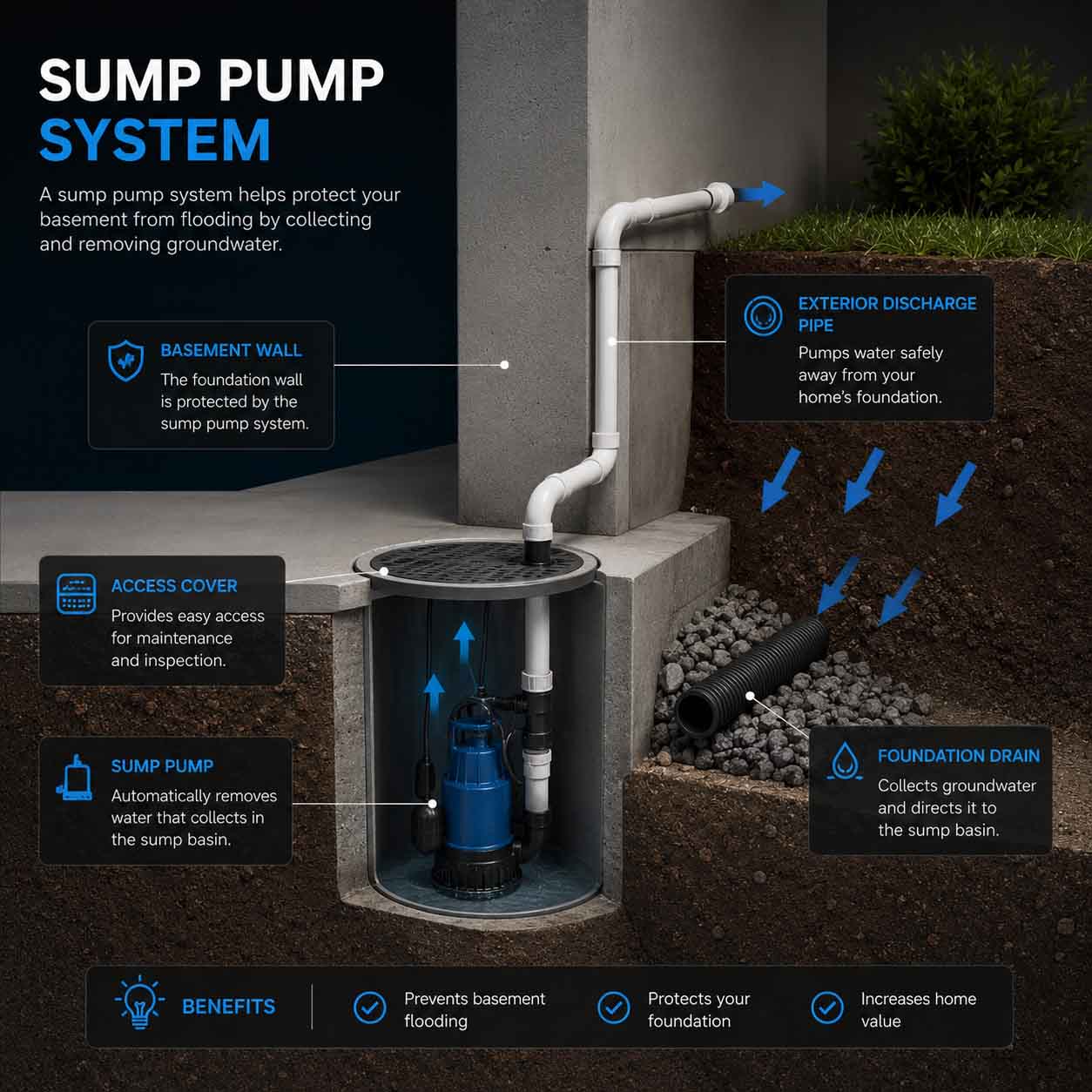
- Internal Cavity Drain Membrane Systems (Type C Waterproofing): Existing wall linings and floor coverings are removed back to the structural surface before studded drainage membranes are installed across walls and floors. A sump pump system is then fitted to collect and remove water safely away from the property.
When to Use Invasive Waterproofing Solutions
Severe Hydrostatic Pressure
Invasive waterproofing methods are often necessary for below-ground basements and retaining walls exposed to intense groundwater pressure. In these situations, surface coatings and injection systems may fail as water pressure forces moisture back through the structure.
Complete Mechanical DPC Failure in Unstable Walls
These solutions are recommended when existing damp-proof systems have completely failed and the wall structure is heavily contaminated with hygroscopic salts or ongoing moisture damage. Installing a new physical barrier provides a long-term solution where chemical treatments may not be reliable.
Deep Basement Conversions
Invasive systems are commonly used when converting damp underground spaces into dry, habitable areas. This is especially important for basement renovations that must comply with modern waterproofing standards and local building regulations for residential or commercial use.
Selection Decision Matrix
To quickly determine which category fits a specific scenario, use this decision framework:
| If the problem is… | And the building type is… | The correct solution category is… |
| Defective drainage, high ground level, or bad ventilation | Any building type (Historic or Modern) | Non-Invasive (Fix the source first) |
| Active rising damp (groundwater capillary action) | Modern brick/cement construction | Minimally Invasive (Chemical Injection) |
| Leaking cracks in a concrete slab or basement | Modern concrete foundation | Minimally Invasive (Resin Injection) |
| Active rising damp (groundwater capillary action) | Historic solid-wall / Lime mortar | Non-Invasive (Environmental management/breathability) |
| Heavy underground water flooding through walls | Below-ground basement or cellar | Invasive (Cavity membranes, sump pumps, or external excavation) |
Conclusion: The Practical Takeaway
When it comes to damp proofing, there’s no one‑size‑fits‑all solution. The right approach depends on your property’s age, condition, and the severity of moisture problems.
Step One — Start Simple: Begin with non‑invasive fixes like improving drainage, lowering soil levels, or boosting ventilation. These environmental changes often solve the issue while protecting your home and saving money.
Step Two — Go Deeper if Needed: If the problem stems from a failed or missing damp proof course, minimally invasive chemical or resin injections provide a reliable barrier without major disruption.
Step Three — Last Resort: Only consider fully invasive options — such as rebuilding walls, external excavation, or installing cavity drain systems — when dealing with basements, underground spaces, or heavy groundwater pressure.
The key is to diagnose carefully and start with the least disruptive option. Historic buildings often need breathable solutions, while modern structures benefit from solid barriers. By following this ladder approach, you’ll achieve lasting protection without risking unnecessary damage.