
Introduction
Mould under carpet is often dismissed as a minor household nuisance, but its presence can signal deeper structural issues such as rising damp. Left untreated, this hidden problem can escalate into costly repairs, affecting not only flooring but also walls, foundations, and indoor air quality. Understanding the causes, risks, and treatments of mould under carpet is essential for homeowners, property managers, and construction professionals.
Causes of Mould Under Carpet
Mould thrives in environments where moisture and organic material coexist. Carpets, with their fibers and underlay, provide the perfect breeding ground when dampness infiltrates from below. Common causes include:
- Rising damp: Ground moisture traveling upward through concrete or masonry.
- Leaks and poor drainage: Water seeping into subfloors.
- Inadequate ventilation: Trapped humidity beneath furniture and flooring.
Specific scenarios highlight the problem:
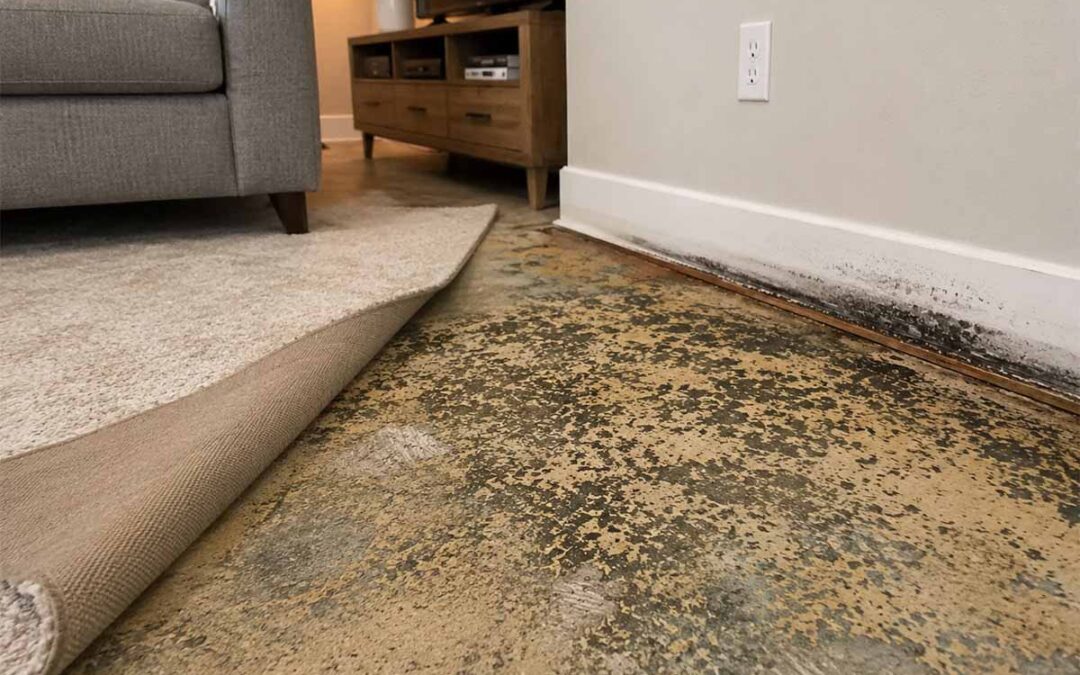
- Black mould under carpet often develops in areas with persistent moisture and poor airflow.
- Mould on carpet under bed and mould on carpet under sofa occur where heavy furniture restricts ventilation.
- Mould on concrete floor under carpet indicates moisture penetration from the slab, a common sign of salt damp.
Risks of Ignoring Mould Under Carpet
Failure to address mould under carpet can lead to:
- Structural damage: Moisture weakens timber skirting boards, flooring, and even masonry.
- Health hazards: Exposure to spores from black mould under carpet can trigger allergies, asthma, and respiratory illness.
- Escalating costs: What begins as a small patch of mould on carpet under bed can spread, requiring full carpet replacement, subfloor repairs, and damp-proofing treatments.
Connection to Rising Damp
Mould under carpet is not an isolated issue; it often points to moisture damp. When moisture travels upward from the ground, it bypasses failed or outdated damp-proof courses. This process not only damages carpets but also leads to:
- Salt deposits on walls and floors.
- Peeling paint and blistering plaster.
- Long-term deterioration of structural integrity.
Ignoring mould on concrete floor under carpet, for example, allows rising moisture to progress unchecked, eventually requiring extensive remedial works.
Treatment and Prevention
Effective solutions involve both immediate mould removal and long-term damp-proofing strategies:
- Professional rising damp treatments: Chemical injection, damp-proof course renewal, or tanking systems.
- Carpet replacement: Removing contaminated materials to prevent spore spread.
- Ventilation improvements: Ensuring airflow beneath beds, sofas, and other furniture.
- Drainage and landscaping adjustments: Redirecting water away from foundations.
Preventive measures save thousands in repair costs compared to ignoring early signs of mould under carpet.
Conclusion
Mould under carpet is more than an aesthetic or hygiene issue—it is a warning sign of rising damp. Whether it appears as black mould under carpet, mould on carpet under bed, mould on carpet under sofa, or mould on concrete floor under carpet, the consequences of neglect are severe. Addressing the root cause through SS Remedial’s professional damp treatments ensures healthier living conditions and protects property value.
Protect Your Home from Rising Damp
Don’t let moisture damage your walls, floors, and indoor air quality. Our expert team provides proven residential rising damp treatments across Brisbane and Southeast Queensland. Act now to safeguard your property and avoid costly repairs.