

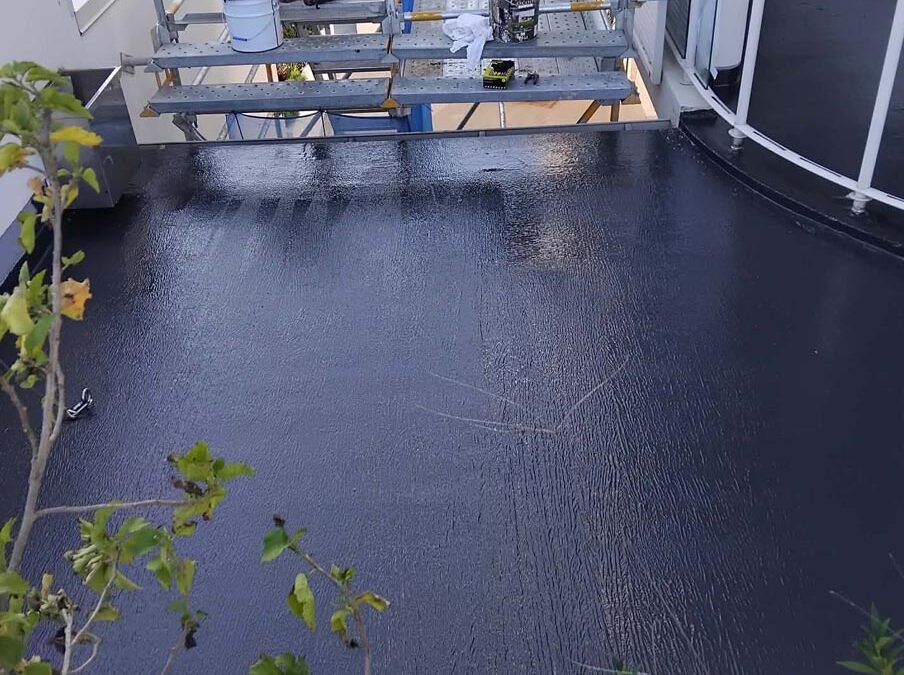
When it comes to protecting large concrete roof decks, engineers and architects are increasingly moving away from traditional sheet membranes, such as torch-on bitumen or TPO, and choosing Liquid Applied Waterproofing Membranes (LAMs).
Large concrete expanses come with their own structural challenges, including thermal movement, complex geometry, and structural settling. Liquid systems, such as polyurethanes, polyureas, and PMMA, offer clear engineering advantages that help address these issues directly.
Liquid Applied Roof Deck Waterproofing Systems are seamless, flexible membranes applied directly to concrete or metal roof decks to prevent water ingress, resist UV damage, and bridge cracks. They are widely used in commercial and industrial buildings because they adapt to complex roof geometries and provide long-term durability.
Here is a technical breakdown of why engineers favour seamless liquid-applied systems for large concrete decks.
1. Elimination of Seams (The #1 Point of Failure)
In large-scale roofing, most leaks do not occur through the centre of the waterproofing material. They occur at the seams.
The Problem with Sheets: Standard sheet membranes require overlapping joints every 1 to 2 metres. On a massive concrete deck, this can create kilometres of seams. If even a single centimetre of a torch-on lap or adhesive seam fails due to poor workmanship, thermal stress, or ageing, water can enter.
The Liquid Advantage: Liquid applied systems cure into one continuous, monolithic layer across the entire deck. Because there are no laps, welds, or seams, one of the main failure points of traditional concrete roof waterproofing is removed.
2. Superior Detailing and Complex Geometry
Large concrete roof decks are rarely flat, empty expanses. They are often filled with penetrations and details, including HVAC plant equipment, solar panel mounts, expansion joints, drainage gullies, parapets, and structural columns.
- Sheet Membranes: Cutting, folding, and flashing sheet membranes around detailed penetrations takes careful workmanship. It is time-consuming and creates more opportunities for human error.
- Liquid Waterproofing Systems: Liquid applied roof deck waterproofing membranes are self-flashing. They flow around complex shapes, pipes, and irregular angles of the concrete roofs, then cure into a tight, glove-like fit. This creates a reliable seal at critical termination points where leaks are most likely to occur.
3. High Elastomeric Capability for Thermal Movement
Large concrete slabs are dynamic structures. Day-to-night temperature changes, also known as thermal shock, cause concrete to expand and contract significantly. Liquid waterproofing systems, particularly premium polyurethanes and polyureas, offer excellent elongation and crack-bridging performance, often exceeding 400% to 600%.
As the concrete develops micro-cracks or shifts over time, the elastomeric liquid roof deck waterproofing membrane stretches with the movement without tearing or losing its waterproofing integrity.
4. Full-Surface Adhesion and Leak Localization
One of the strongest engineering advantages of a liquid system is that it bonds fully to the substrate across 100% of its surface area.
| Feature | Sheet Membranes (Loose-laid / Torch-on) | Liquid Applied Roof Waterproofing Membranes (Fully Bonded) |
| Water Migration | High. Water can travel under the sheet, making the internal leak location hard to find. | None. Water cannot migrate beneath the waterproofing membrane for roof deck. |
| Leak Detection | Difficult. A leak inside the building could be 20 meters away from the actual tear. | Direct. If the water proofing membrane for roof deck is punctured, the leak is directly below the puncture. |
| Repair Process | Often requires stripping massive sections of the roof. | Simple localized patch over the damaged area. |
5. Cold-Applied Safety (No Torches)
Safety and liability are major considerations in engineering specifications.
Traditional bituminous roofing relies on open-flame torches to bond the membrane to the flat roof deck. On large commercial projects, this creates a serious fire risk, can increase insurance costs, and may make work health and safety (WHS) compliance more complex.
Liquid systems are cold-applied using a roller, squeegee, or airless spray. This removes the need for open flames during installation and significantly reduces fire risk on site.
While specific legal battles or proprietary company names can be tightly guarded by non-disclosure agreements (NDAs) and insurance settlements, torch-on roof fires are a massive, well-documented issue across the commercial manufacturing and warehousing sectors worldwide.
In fact, the risk is so severe that between 2013 and 2014, the UK National Federation of Roofing Contractors (NFRC) found that an average of one major commercial building fire per month was caused by roofing torches. This alarming statistic sparked the global “Safe2Torch” campaign to force contractors away from open flames near combustible materials.
6. Lightweight Structural Load
Large concrete decks already carry significant loads, including the dead load of the concrete itself and live loads from HVAC equipment, foot traffic, or maintenance access.
Liquid applied roof deck waterproofing membranes are installed at controlled dry film thicknesses, typically between 1.5mm and 3mm. This adds very little weight to the structure compared with heavy multi-layer asphalt systems or ballast-weighted sheet membranes. For engineers, this provides more flexibility when assessing structural load requirements.
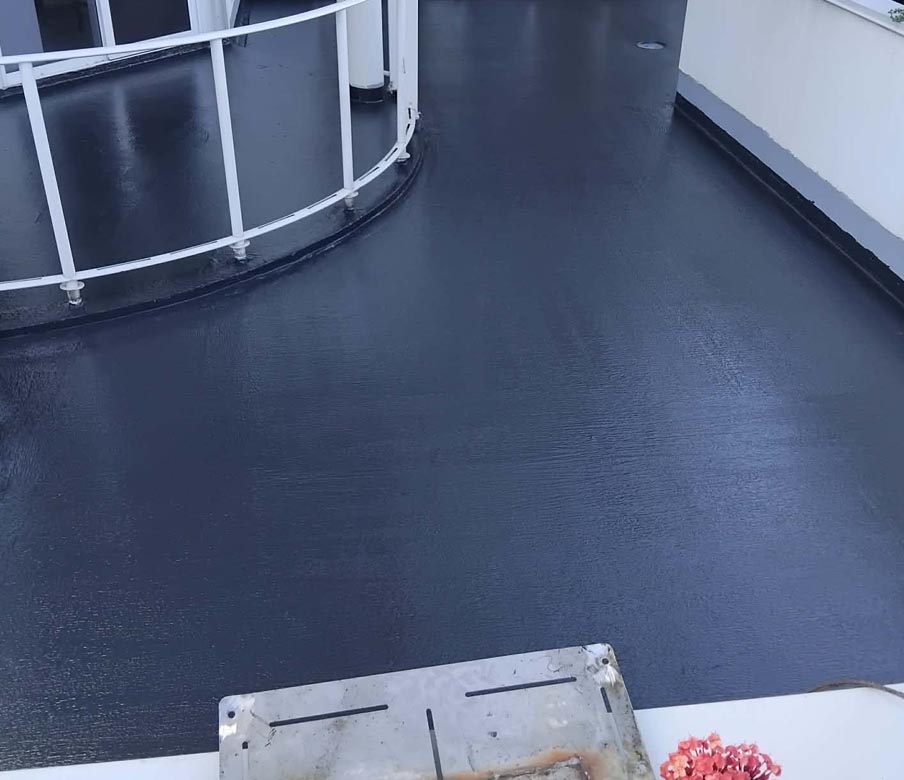
Roof Deck Waterproofing
7. Long-Term Maintenance and Lifecycle Costs
Engineers often evaluate waterproofing systems based on their total lifecycle cost, not just the initial installation expense.
Sheet membranes can require extensive repairs if seams fail or sections become damaged. Liquid applied flat roof deck waterproofing systems can typically be repaired LOCALLY without removing large sections of the existing membrane. Reduced maintenance requirements can result in lower ownership costs over the lifespan of the structure.
8. Compatibility with Roof Deck Traffic Using Protective Coatings
Many large concrete roofs are not simply rootopfs—they also serve as:
- Plant decks (see planter box waterproofing)
- Service access areas
- Podium decks
- Rooftop recreation spaces
Liquid roof deck waterproofing systems can be paired with protective coatings and trafficable wear layers to accommodate pedestrian or maintenance traffic while preserving waterproof integrity.
9. UV and Weather Resistance
Large roof decks are continuously exposed to harsh environmental conditions.
- UV radiation
- Heavy rainfall
- Ponding water
- Coastal salt exposure
- Extreme temperature fluctuations
Advanced polyurethane, polyurea, and PMMA systems are formulated to withstand prolonged weather exposure without premature degradation.
10. Faster Installation on Large Projects
Project timelines are often a major factor in engineering and construction decisions.
Liquid systems can be applied quickly using airless spray equipment, fewer detailing requirements can reduce labour hours and some PMMA systems offer rapid curing times, allowing other trades to access the area sooner.
11. Excellent Crack-Bridging Performance
While thermal movement is important, engineers also consider the waterproofing system’s ability to bridge existing and future substrate cracks.
- Hairline shrinkage cracks are common in concrete.
- Structural movement can create new concrete cracks over time. (See Crack Injection Repair)
- High-performance flat roof deck membranes maintain waterproofing continuity even as cracks develop beneath the system.
12. Ideal for Refurbishment and Overlay Projects
Large commercial buildings often require waterproofing upgrades without complete rooftop replacement.
- Liquid flat roof deck waterproofing membranes can frequently be installed over suitable existing waterproofing systems.
- This reduces demolition costs and waste disposal.
- Building operations can often continue with minimal disruption.
13. Sustainability and Reduced Material Waste
Sustainability is becoming an increasingly important factor in modern engineering specifications, particularly for large waterproofing flat roof deck projects where long-term performance and environmental impact are carefully considered.
- Reduced material offcuts and landfill waste during installation compared to many traditional sheet membrane systems.
- Potential to extend the service life of existing structures through remedial waterproofing flat roof deck solutions rather than complete roof replacement.
- Many liquid applied systems can be installed over suitable existing substrates, reducing demolition waste and minimising the environmental footprint of refurbishment projects.
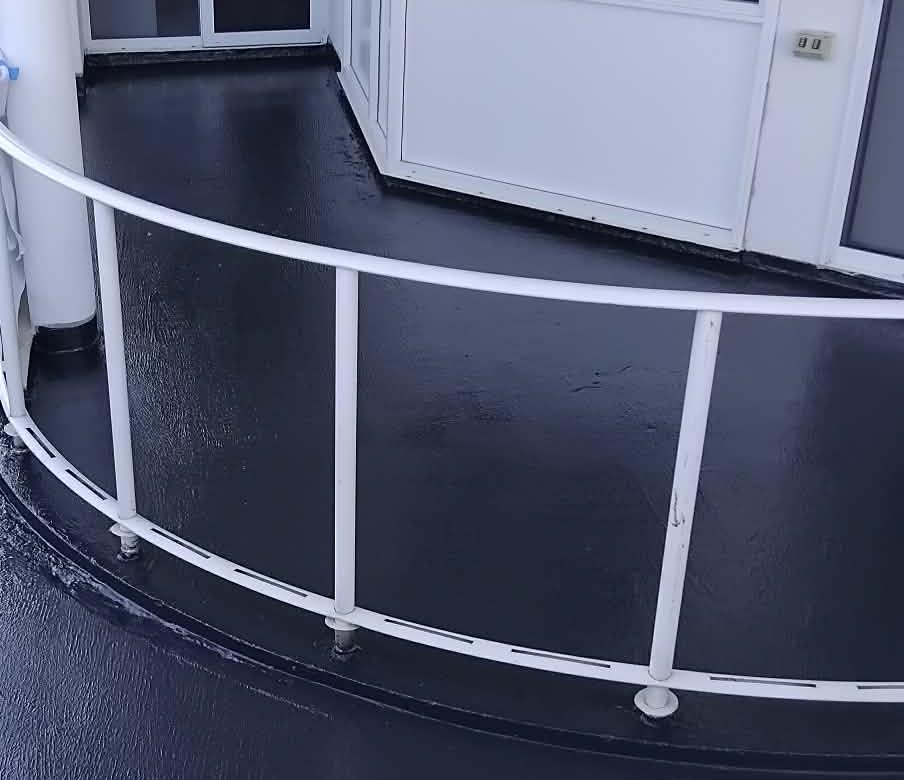
Flat roof deck waterproofing
14. Better Performance Around Expansion Joints
Large concrete roof decks require expansion joints to accommodate structural movement.
- Sheet membrane detailing around joints can be labour-intensive and prone to failure.
- Liquid systems integrate easily with reinforcing fabrics, backing rods, and elastomeric expansion joint sealing treatments.
- This helps maintain waterproof continuity in high-movement areas.
15. Proven Performance in Coastal Environments
This would be particularly relevant for Gold Coast and South Brisbane audiences.
Coastal buildings experience higher UV exposure, humidity, wind-driven rain, and salt-laden air.
Liquid applied rooftop waterproofing systems are commonly specified for podium decks, rooftop structures, and commercial buildings in marine environments due to their durability and flexibility.
Engineering Best Practice Note
To ensure long-term performance on large concrete decks, QBCC- licensed roof deck waterproofing specialist typically specify liquid systems that meet strict local standards, such as AS 4654 for external waterproofing in Australia.
Proper substrate preparation is essential before application begins. This may include diamond grinding the concrete to achieve the required Concrete Surface Profile (CSP), treating active expansion joints with backing rods, and sealing joints with polyurethane sealants.
Protect Your Asset with Engineering-Grade Waterproofing that is Insurance-Friendly Solutions
At S&S Remedial, we prioritize asset protection and risk mitigation by utilizing advanced, seamless liquid waterproofing systems. Because these high-performance roof deck waterproofing membranes are cold-applied, they completely eliminate the need for open-flame “Hot Works” (such as traditional torch-on bitumen). For body corporates, property managers, and commercial asset owners, this means absolute safety: zero fire hazard, no disruptive on-site structural risks, and zero regulatory “Fire Watch” overhead.
By removing the primary cause of site construction fires and eliminating weak lap joints, our liquid systems deliver a structurally superior barrier that keeps your property safe, your tenants undisturbed, and your building insurance fully compliant.
👉 Contact the SS Remedial Team Today