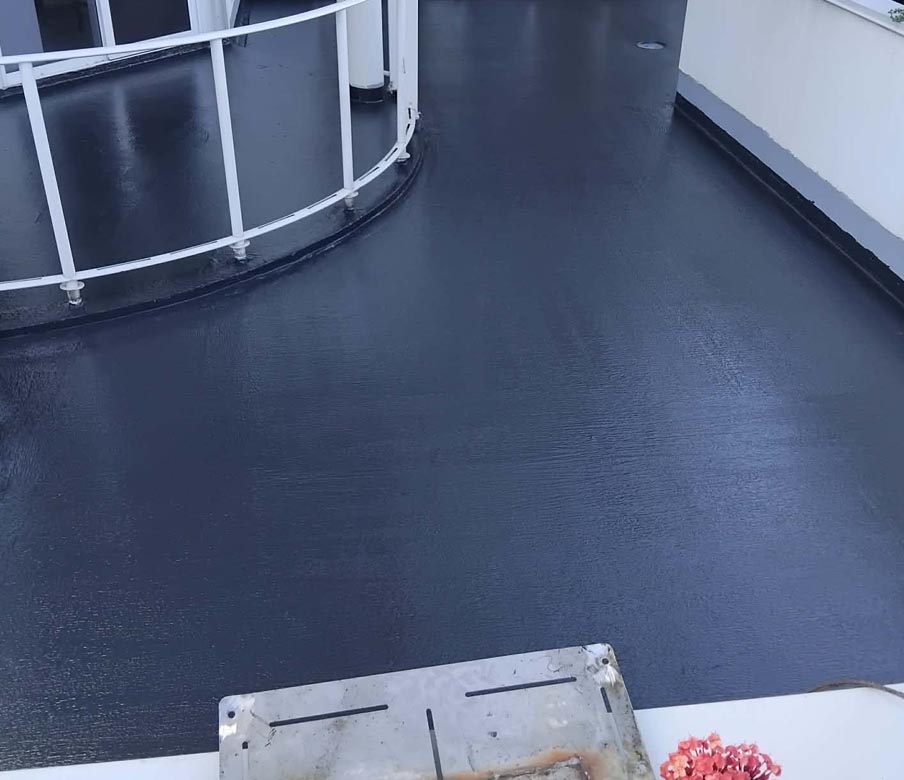

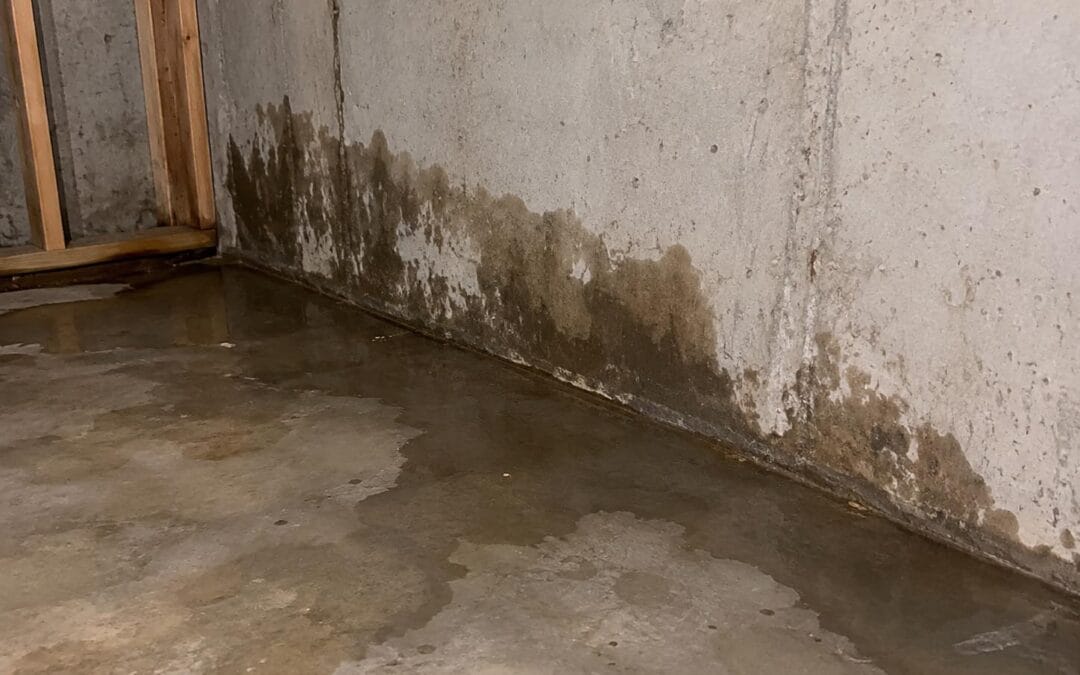
Water leaks rarely have just one entry point. A visible crack might be where the water is showing up, but moisture can also make its way through porous concrete, masonry, joints, and other weak points in the wall.
That’s why crack injection and waterproofing membranes often work best as a combined system. Crack injection targets specific leaks, while the membrane provides broader protection across the wall surface.
What Does Crack Injection Do?
Crack injection seals the direct path water is taking through a concrete wall.
The right injection material depends on the type of crack and whether there is active water movement.
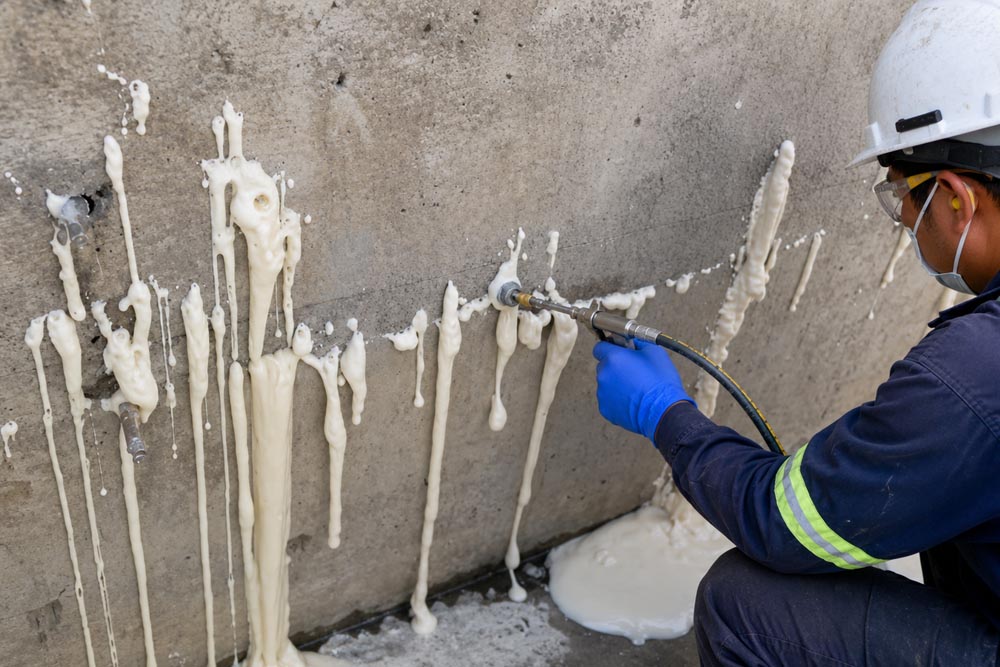
- Polyurethane injection is commonly used for leaking cracks. The material reacts with moisture and expands to fill the crack, creating a flexible seal that can accommodate minor movement.
- Epoxy injection is better suited to dry, stable structural cracks. Epoxy bonds the concrete together and can help restore structural integrity, but because it cures rigid, it generally isn’t suitable for cracks that are still moving.
Correctly identifying the crack before carrying out repairs is important. Simply filling the surface may hide the problem without sealing the full depth of the crack.
What Does a Waterproofing Membrane Do?
While crack injection deals with individual leak points, a waterproofing membrane protects a much larger area.
Exterior waterproofing membranes are installed on the outside of the foundation or retaining wall. Depending on the system, this may involve liquid-applied membranes, sheet membranes, polymer-based products, or bentonite systems. Exterior waterproofing helps stop water before it reaches the structure, although installation usually requires excavation and proper drainage.
Interior waterproofing systems can include cementitious coatings, crystalline waterproofing, drainage membranes, and dimple-board systems.
It’s important to understand that drainage membranes don’t necessarily prevent water from entering the wall. Instead, they’re designed to control that moisture and direct it towards a suitable drainage point, such as a perimeter drain or sump system.
Why Use Crack Injection and Waterproofing Together?
Using only one waterproofing method can leave other potential leak paths untreated.
Applying a membrane over an actively leaking or moving crack, for example, can put unnecessary pressure on the membrane and potentially cause blistering, bridging, or failure.
Crack injection on its own has a different limitation. It can seal the obvious leak but won’t necessarily address moisture travelling through porous concrete, construction joints, wall penetrations, or small hairline cracks elsewhere.
Combining the two provides more complete protection. The injection seals concentrated leak points, while the waterproofing membrane protects the surrounding surface and helps manage moisture across the wider area.
Typical Waterproofing and Crack Repair Process
A professional waterproofing repair will usually begin with finding out where the water is actually coming from rather than immediately covering the affected area.
- Identify the source of the leak. Check cracks, wall-to-floor joints, penetrations, tie holes, porous masonry and exterior drainage. Cracks should also be assessed to determine whether they’re stable or still moving.
- Address drainage problems. Where possible, correct issues such as poor grading, overflowing gutters, inadequate stormwater drainage or downpipes discharging too close to the structure. Reducing hydrostatic pressure can significantly improve the performance of the waterproofing system.
- Inject leaking cracks. Injection ports are installed along the crack before polyurethane or another suitable material is introduced under controlled pressure. The goal is to fill the water path through the wall rather than simply sealing its visible surface.
- Prepare the substrate. Efflorescence, loose concrete, contaminants and failing coatings need to be removed. Voids and penetrations are repaired, and the substrate is prepared according to the waterproofing manufacturer’s specifications.
- Install the waterproofing membrane. Liquid membranes must be applied at the specified coverage rate and dry-film thickness. Sheet and drainage membranes require correctly treated seams, penetrations and termination points.
- Provide somewhere for water to go. Where an internal drainage system is used, collected water needs to discharge through a suitable perimeter drain, sump or approved drainage system.
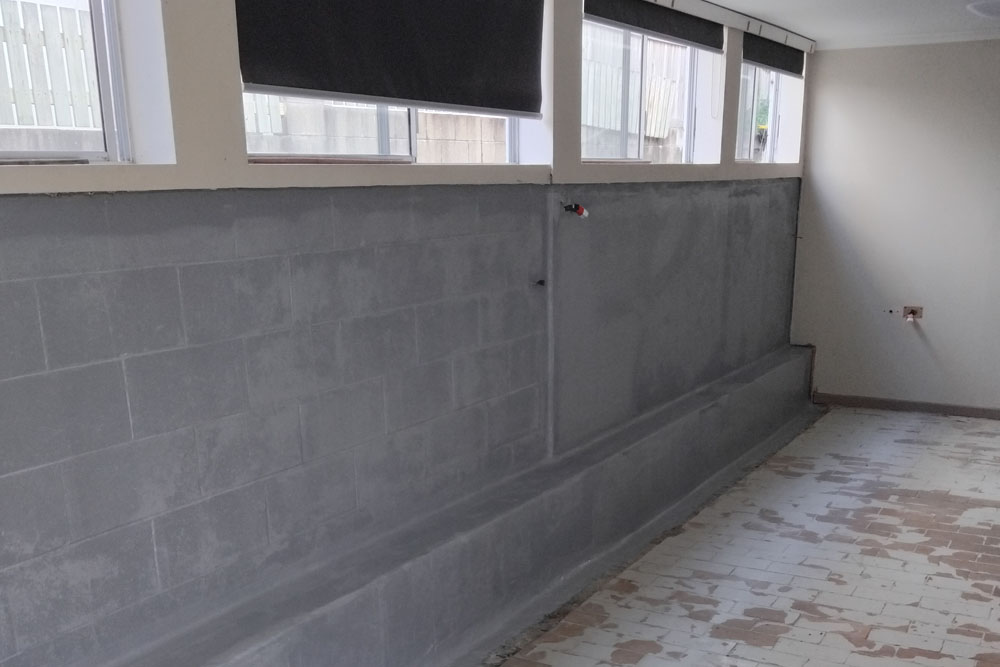
Basement Membrane Waterproofing
Good waterproofing isn’t simply about stopping the visible leak. It’s about controlling how water reaches, moves through and drains away from the structure.
Choosing the Right Waterproofing Solution
| Problem | Typical Solution |
|---|---|
| One leaking crack with an otherwise dry wall | Polyurethane crack injection, with local waterproofing if required |
| Multiple cracks and damp or porous walls | Crack injection followed by a suitable waterproofing membrane or coating |
| Ongoing seepage or high hydrostatic pressure | Crack repairs combined with drainage, sump management and/or an exterior waterproofing system |
| Dry, stable structural crack | Epoxy injection, with additional waterproofing if moisture remains an issue |
| Cracks that are widening or continuing to move | Structural assessment before waterproofing repairs proceed |
The correct system depends on the substrate, water pressure, drainage conditions and cause of the cracking. There isn’t one waterproofing product that suits every leak.
Common Waterproofing Mistakes
Some waterproofing failures aren’t caused by the membrane itself. They’re caused by what’s underneath it or by failing to address the original source of the water.
Common problems include:
- Applying waterproofing directly over an active leak without repairing the crack first
- Using rigid epoxy on a wet or moving crack
- Applying membranes to poorly prepared or contaminated surfaces
- Failing to achieve the manufacturer’s required membrane thickness
- Ignoring drainage and hydrostatic pressure around the structure
- Treating significant horizontal or stair-step cracking as a simple waterproofing issue
Proper preparation and product selection are just as important as the membrane application itself.
When Should You Call a Waterproofing Professional?
Straightforward seepage and leaking cracks can often be addressed with professional crack injection and waterproofing. However, cracks that are widening, horizontal cracking, stair-step cracking, significant displacement or bowing walls can indicate movement or structural pressure.
These situations should be properly assessed before simply sealing or coating the area.
For Gold Coast properties, waterproofing also needs to account for local conditions, including periods of heavy rainfall, drainage around the building and the specific construction of the property.
An experienced Gold Coast waterproofing contractor should be able to identify the likely source of the leak, explain why a particular crack repair or waterproofing membrane is being recommended, and provide a system designed to manage the underlying moisture problem—not just cover up the visible symptoms.
Whether you’re dealing with concrete crack repairs, water leaks, failed membranes or ongoing moisture problems, getting the diagnosis right from the beginning is the key to a longer-lasting waterproofing repair.
Related topics: