
For decades, fixing a damp or leaking cellar often meant choosing between two costly options. Property owners either faced extensive excavation work to install or repair an external waterproofing system, or they relied on internal coatings that offered only temporary relief before blistering, peeling, and failing.
Today, waterproofing has evolved significantly. At SS Remedial, advanced diagnostics, innovative repair techniques, and high-performance waterproofing cellar walls and floors have transformed the way below-ground water ingress is managed. Rather than relying on disruptive excavation and guesswork, modern cellar remediation uses engineering-driven solutions that accurately identify problems and resolve them from within the structure.
Here’s how today’s technology is changing the future of cellar waterproofing.
1. Replacing Guesswork with Advanced Moisture Diagnostics
Effective waterproofing of cellar walls begin with accurate diagnosis.
Instead of excavating around a building to locate the source of a leak, modern technology allows technicians to assess moisture movement and structural conditions without disturbing the surrounding property.
Infrared Thermography: High-definition thermal imaging scans cellar walls and floors to identify hidden moisture pathways. As water moves through masonry and concrete, it creates temperature variations that are invisible to the naked eye. Thermal cameras detect these changes, allowing specialists to pinpoint moisture intrusion before visible damage appears.
Ground Penetrating Radar (GPR): Ground Penetrating Radar uses high-frequency electromagnetic signals to examine concrete slabs, retaining walls, and surrounding structures. This technology helps identify:
- Hidden voids behind walls
- Areas of soil erosion
- Water migration pathways
- Reinforcement steel locations
- Structural anomalies within concrete
This detailed data enables targeted repairs and eliminates unnecessary demolition or excavation.
2. Advanced Resin Injection Systems to Control Hydrostatic Pressure
One of the biggest challenges in waterproofing cellar walls or floors is hydrostatic pressure—the force exerted by groundwater against below-ground structures.
Traditional waterproofing methods often attempted to resist this pressure with internal coatings or membranes, which could eventually separate from the substrate under constant water pressure. Modern remediation waterproofing takes a different approach.
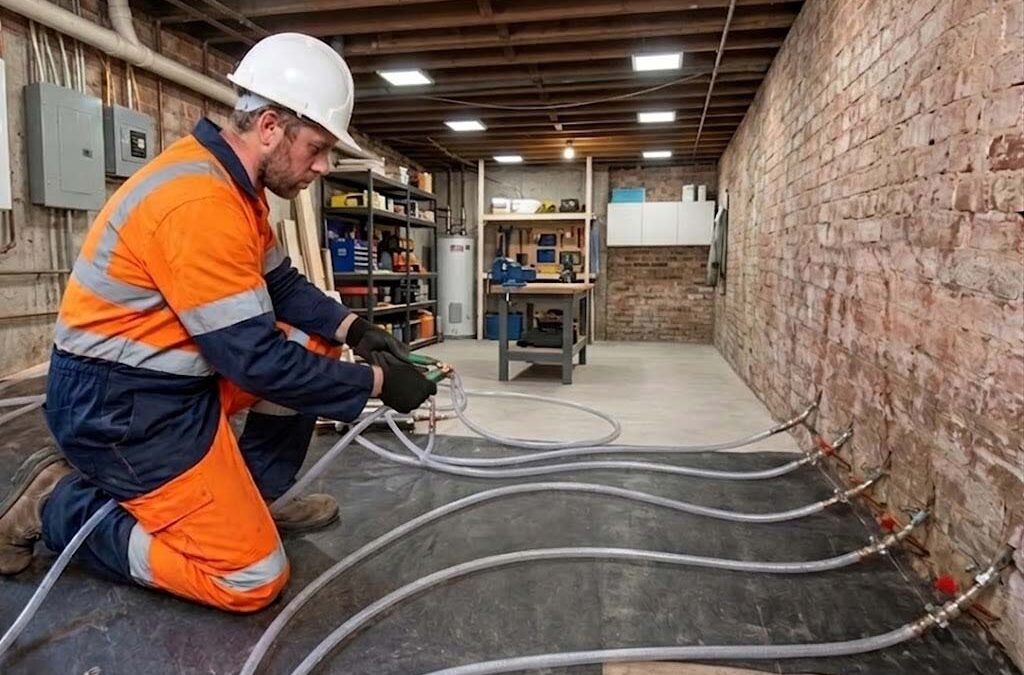
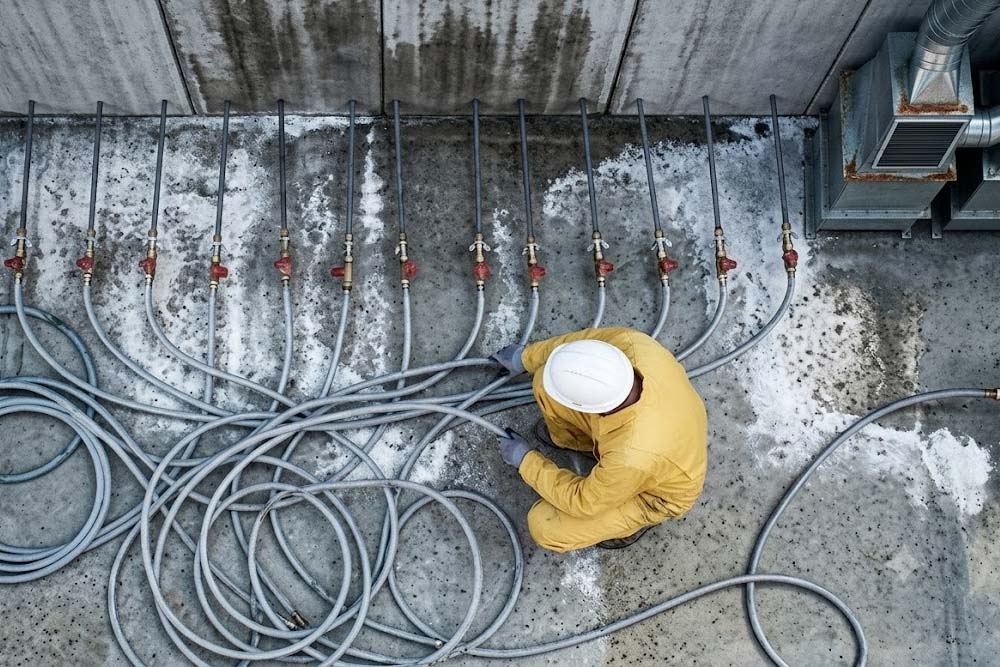
High-Pressure Polyurethane Injection: Specially designed injection ports are installed into identified cracks and water-entry points. Through these ports, technicians inject polyurethane resins under controlled high pressure, allowing the material to penetrate deep into cracks, joints, and voids. The expanding resin forms a durable waterproof barrier that blocks active water ingress at its source.
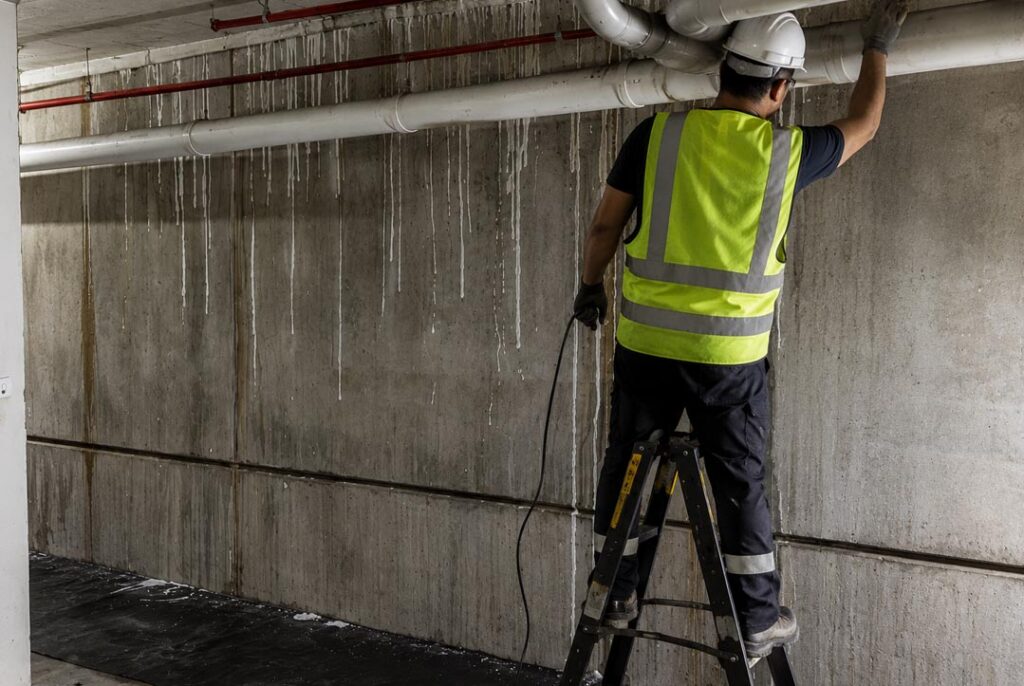
Hydrophilic and Hydrophobic Resin Technologies: Different conditions require different solutions. Hydrophilic polyurethane resins react with water and expand to create a flexible, long-lasting seal. These systems are ideal for active leaks and moving structural joints. Hydrophobic polyurethane resins repel water and expand rapidly into dense foam, making them highly effective for filling larger voids and stabilising soil conditions behind retaining walls and cellar structures.
By selecting the appropriate injection material, technicians can create tailored remedial waterproofing solutions that address each property’s specific challenges.
3. Creating a Permanent Waterproof Barrier Within the Concrete
In many existing buildings, the original external waterproofing system has deteriorated over time or was never properly installed.
When positive side cellar wall waterproofing (the exterior barrier applied during initial building construction) completely degrades or was never properly installed due to boundary-line constraints, retrofitting a new exterior shield is often physically impossible. The modern approach master’s negative-side cellar wall waterproofing by altering the physical characteristics of the existing concrete.
Benefits include:
- Long-term waterproof protection
- Resistance to blistering and delamination
- Enhanced durability under hydrostatic pressure
- Reduced maintenance requirements
- Self-sealing capability for future hairline cracks
4. Innovative Waterproofing Materials and Systems
Modern waterproofing products offer significantly greater performance, flexibility, and durability than traditional systems.
SS Remedial incorporates a range of advanced solutions, including:
- Flexible liquid-applied membranes
- Expansion joint sealing technologies
- Polyurethane waterproof injection systems
- Structural epoxy crack repair systems
Each solution is carefully selected to suit the building’s construction type, environmental conditions, and long-term cellar damp waterproofing requirements.
Stop Cellar Water Ingress Before It Causes Costly Damage
SS Remedial provides advanced cellar waterproofing solutions for Brisbane and Gold Coast properties, using modern diagnostics, resin injection systems, and long-lasting waterproofing methods to protect below-ground spaces.
The Modern Cellar Waterproofing Process
A successful cellar remediation project follows a structured, technology-driven workflow designed to achieve long-lasting results without extensive excavation.
- Phase 1: Advanced Diagnostics : Thermal imaging and Ground Penetrating Radar identify moisture pathways, structural defects, and hidden voids. This provides a clear understanding of the underlying cause of water ingress.
- Phase 2: Water Ingress Control: Targeted polyurethane injection systems are used to stop active leaks, fill voids, and reduce hydrostatic pressure acting on the structure.
- Phase 3: Surface Preparation: Dust-controlled diamond grinding removes failed coatings, contaminants, and efflorescence, exposing sound concrete and preparing the substrate for waterproof treatment.
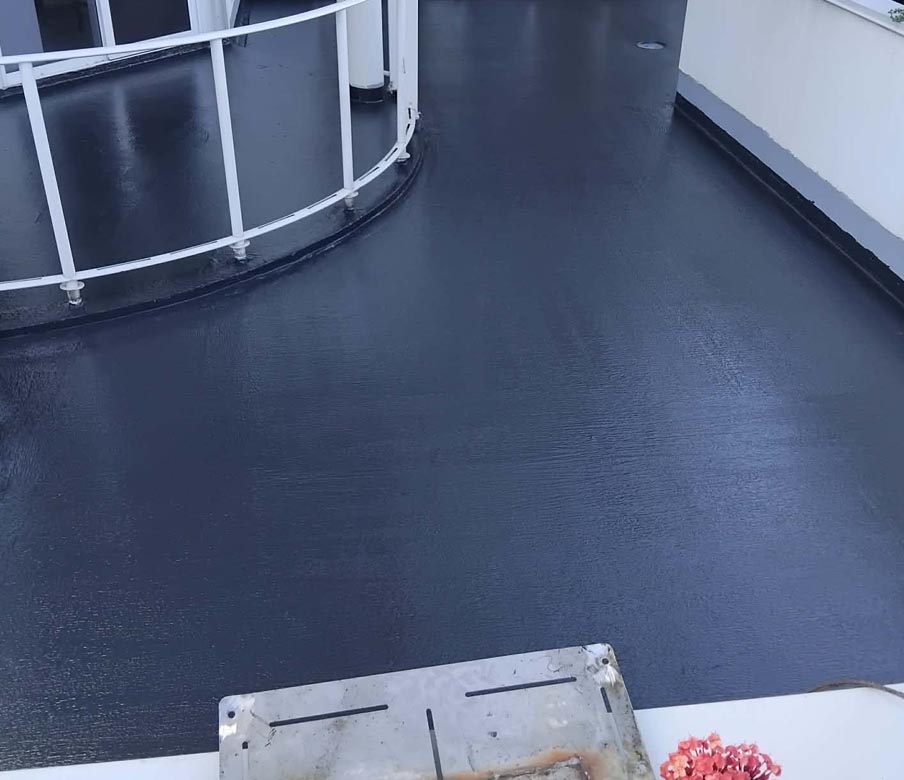
Phase 4: Liquid-Applied Polyurethane Membrane Installation: A flexible liquid-applied polyurethane membrane is applied to the prepared concrete surfaces to create a seamless waterproof barrier. The membrane accommodates minor substrate movement and helps prevent future water ingress.
Rising Basement Damp Solution
Protecting Structural Integrity for the Long Term
Water intrusion affects more than just the appearance of a cellar.
Persistent moisture can lead to reinforcement corrosion, commonly known as concrete cancer, where embedded steel begins to rust, expand, and compromise the structural integrity of the concrete.
By combining waterproof injection systems with structural crack repairs and advanced waterproofing technologies, cellar walls can be restored and protected against ongoing deterioration. This not only prevents future water damage but also helps preserve the long-term safety and value of the property.
Delivering Better Waterproofing Outcomes Through Innovation
The waterproofing industry continues to evolve, and modern technology is setting new standards for performance, efficiency, and reliability. Through advanced diagnostics, precision remedial methods, and high-performance waterproofing cellar walls system, SSRemedial delivers effective solutions for even the most challenging Brisbane and Gold Coast cellar waterproofing projects.
By addressing the source of water ingress and implementing long-lasting remediation strategies, property owners can enjoy dry, protected, and structurally sound below-ground spaces for years to come.
Related post:
- Slab Edge Dampness Treatment for Long-Term Moisture Control
- Why Choose SSRemedial for House Waterproofing in Brisbane and the Gold Coast?
- Why Engineers Favor Seamless Liquid Applied Roof Deck Waterproofing Systems for Large Concrete Decks
- Negative-Side Basement Waterproofing Brisbane & Gold Coast
- Cost-Effective & NCC Compliant Negative Waterproofing for Retaining Walls, Basement & Lift Pits
- The Hidden Costs of Ignoring Basement Waterproofing
- When to Use Non-Invasive, Minimally Invasive and Invasive Damp Proofing Solutions
- Causes of Water Ingress and How to Repair It – S&S Remedial
- Resin Concrete Crack Injection Company Brisbane Gold Coast