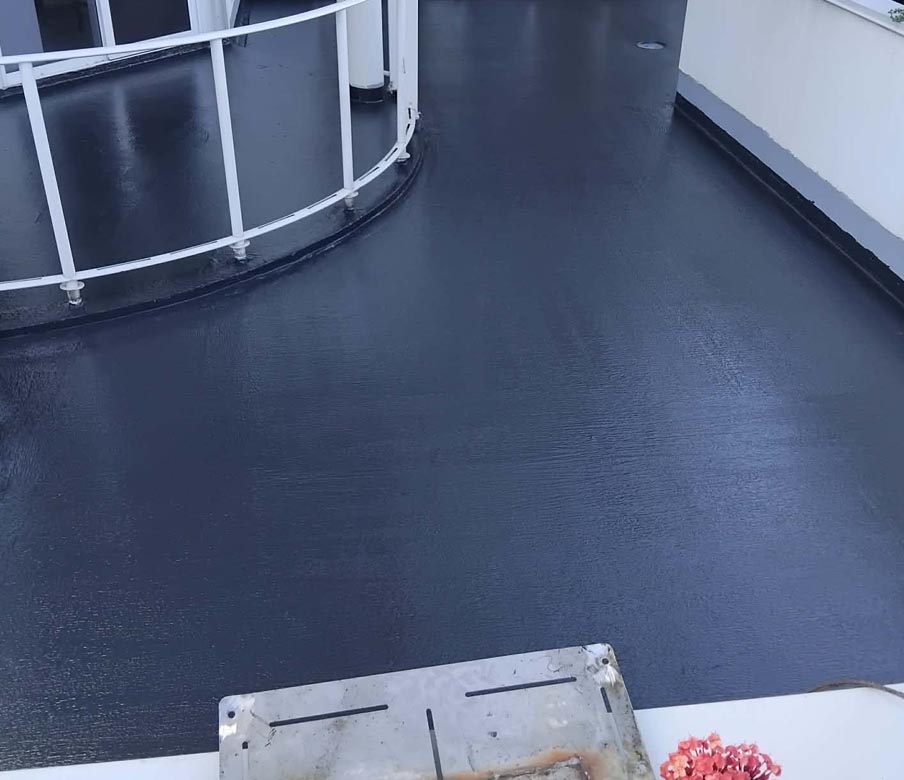

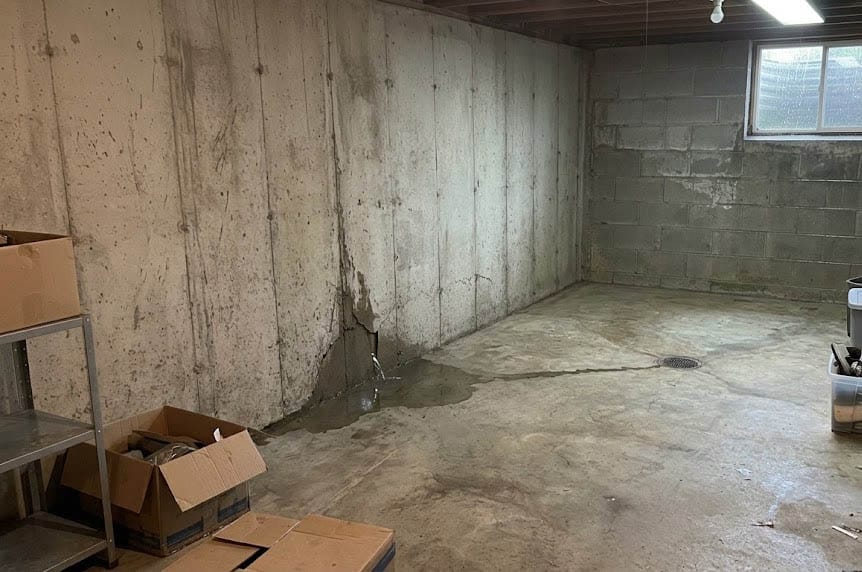
Heavy rain can quickly turn a dry basement into a damp, leaking space, especially when water builds up in the soil surrounding your property. For homeowners and businesses in Brisbane, the Gold Coast, and across South East Queensland, heavy downpours and extended wet weather can put extra pressure on basement walls, foundations, and concrete floors.
When the ground becomes saturated, excess water needs somewhere to go. If drainage is poor or the existing waterproofing system isn’t doing its job, water can find its way through cracks, joints, and other weak points in the structure.
Understanding where basement leaks come from is the first step towards fixing them properly. With the right basement waterproofing approach, you can address the source of water ingress, prevent ongoing moisture problems, and protect your property from costly damage.
1. Hydrostatic Pressure Against Basement Walls
One of the most common reasons basements leak during heavy rain is hydrostatic pressure.
This happens when rainwater soaks into the surrounding soil and builds up against the basement walls. As groundwater levels rise, the pressure increases, pushing water towards any cracks, gaps, or poorly sealed areas in the concrete.
Even small openings can allow water to seep through when the pressure becomes strong enough.
Over time, this can lead to:
- Damp patches and water stains on basement walls
- Peeling or bubbling paint
- Mould growth and musty smells
- Water leaking through concrete cracks and joints
- Damage to internal wall finishes
A properly designed basement waterproofing system, combined with effective drainage, helps manage groundwater and reduce the risk of water entering the structure.
2. Water Entering Through Cracks in Concrete
Concrete is strong, but that doesn’t mean it’s completely waterproof or immune to cracking. Basement walls and floors can develop cracks over time due to concrete shrinkage, ground movement, changes in temperature, or foundation settlement. During heavy rainfall, these cracks can become entry points for groundwater, particularly when water pressure builds up outside the basement.
The good news is that not every leaking crack requires major excavation or extensive repairs. Depending on the condition of the concrete and the type of crack, professional concrete crack injection may be an effective solution. For example, polyurethane crack injection can be used to seal suitable cracks where water is actively leaking. Epoxy crack injection may also be considered for stable structural cracks when structural repair is required.
The important thing is identifying why the crack has formed and choosing a concrete crack repair method that suits the situation.
Protect Your Property from Water Damage
Don’t let moisture problems compromise your investment. Contact our experienced team today to arrange a professional assessment and discuss the most effective basement waterproofing solution for your Brisbane or Gold Coast property.
With over 20 years of experience in diagnosing and resolving water leakage issues, our team is supported by QBCC-registered specialists and uses fully NCC-compliant waterproofing systems.
3. Water Seeping Through Basement Floor Joints
Not all basement leaks come through the walls. Water can also enter through the floor, especially where the concrete slab meets the basement walls. These areas are known as wall-to-floor junctions or construction joints. If these joints haven’t been properly sealed or waterproofed, they can provide a pathway for groundwater to enter the basement.
Other common problem areas include movement joints, plumbing penetrations, and gaps around services passing through the concrete. During prolonged rainfall, groundwater pressure beneath the slab can increase, forcing water through these vulnerable points. Professional basement floor waterproofing may involve a combination of joint sealing, concrete crack injection, waterproof membranes, and drainage improvements. The best solution depends on where the water is entering and how much pressure is acting on the structure.
4. Rising Groundwater Beneath Basement Floors
After several days of heavy rain, the soil beneath a property can become saturated, causing groundwater levels to rise.
This is particularly important for basements built below the natural groundwater level or in areas where water doesn’t drain away easily. As groundwater builds up beneath the concrete slab, it can create upward pressure that pushes water through cracks, construction joints, and other weak points. Sometimes, there may not be an obvious leak. Instead, you might notice that the basement floor stays damp, develops moisture patches, or feels constantly humid. This can happen because moisture moves through porous concrete by capillary action.
Depending on the building’s construction and site conditions, suitable Brisbane and Gold Coast basement waterproofing solutions may include under-slab waterproofing, moisture barriers, subsoil drainage, or specialised internal waterproofing systems. A professional inspection can help determine whether the problem is caused by groundwater pressure, moisture migration, or another source.
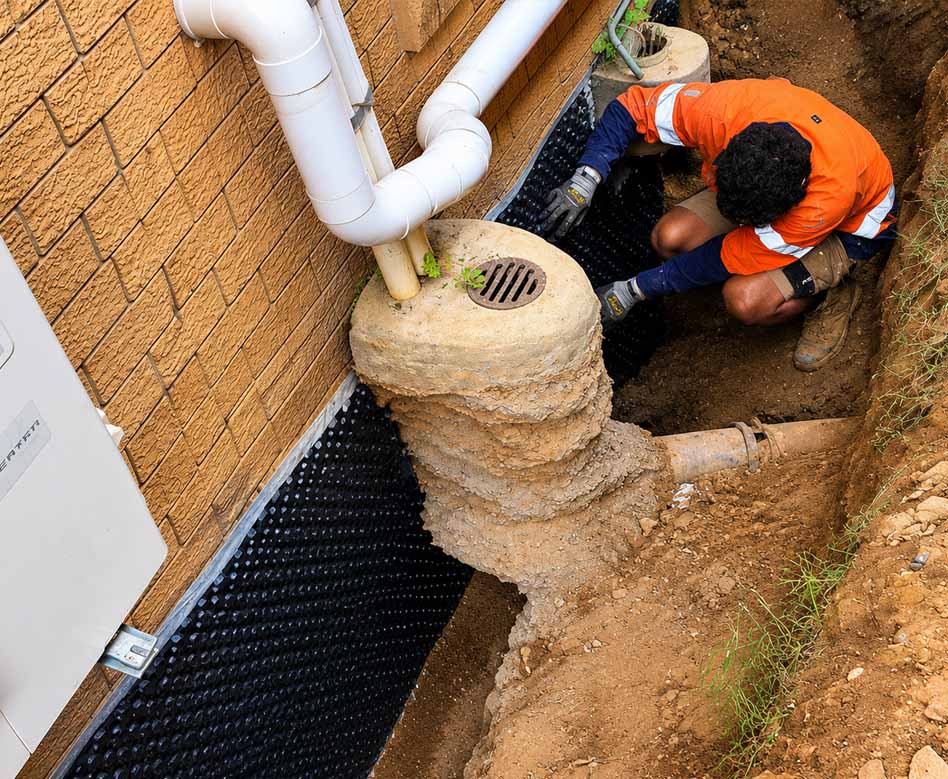
External Basement Waterproofing or Positive Side Waterproofing
5. Damaged or Failed External Basement Waterproofing
External waterproofing is designed to stop groundwater from reaching the inside of basement walls. When installed correctly, a suitable waterproofing membrane provides a protective barrier between the underground structure and the surrounding soil.
However, waterproofing systems can fail if they are damaged, poorly installed, incorrectly detailed, or unsuitable for the conditions. Problems may also develop around construction joints, pipe penetrations, and other areas where the membrane needs to form a continuous seal.
When heavy rain increases groundwater pressure, these weaknesses can allow water to enter the basement. In some situations, repairing the external waterproofing may require excavation to access the affected walls. Where external access isn’t practical, negative-side basement waterproofing may be an option. This involves applying a specialised waterproofing system to the internal face of basement walls or floors to help resist moisture entering from outside. The right approach will depend on the condition of the structure, the source of the leak, and the level of groundwater pressure.
6. Blocked or Poorly Designed Subsoil Drainage
Sometimes, the problem isn’t just the waterproofing itself. Poor drainage around the building can also contribute to basement leaks. Subsoil drainage systems are designed to collect and redirect groundwater away from underground structures. When these systems become blocked, damaged, or overwhelmed during heavy rainfall, water can collect around basement walls and foundations.
Common drainage problems include:
- Blocked or damaged agricultural drains (AG pipes)
- Poorly connected stormwater pipes
- Ground surfaces that slope towards the building
- Inadequate drainage behind retaining walls
- Subsoil drainage systems that cannot handle the volume of water
When water has nowhere to drain, it remains against the basement walls for longer, increasing hydrostatic pressure and the risk of leaks. That’s why effective basement floor waterproofing often goes hand in hand with proper drainage. Fixing the drainage issue can be just as important as sealing the areas where water is getting in.
How Can You Prevent Water From Entering Your Basement?
The most effective way to prevent basement leaks is to address the cause rather than simply covering up the visible damage.
Painting over damp patches or sealing a crack without understanding the water source may provide temporary relief, but it won’t necessarily stop the problem from returning during the next heavy downpour. A professional basement waterproofing assessment can help identify where water is entering and which repair method is most suitable.
Depending on the property, recommended solutions may include:
- Positive-side basement waterproofing: Installing waterproof membranes on the external side of basement walls to stop groundwater before it enters the concrete structure.
- Negative-side basement waterproofing: Applying specialised waterproofing treatments to internal basement surfaces when external access is limited.
- Polyurethane crack injection: Sealing suitable leaking concrete cracks and joints to control water ingress.
- Basement floor waterproofing: Protecting concrete slabs, floor joints, and wall-to-floor junctions against moisture penetration.
- Subsoil drainage improvements: Helping redirect groundwater away from basement walls and foundations to reduce water pressure.
Every basement is different. Factors such as soil conditions, building design, drainage, and existing waterproofing all influence which solution will provide the best long-term result.
Professional Basement Waterproofing in Brisbane and the Gold Coast
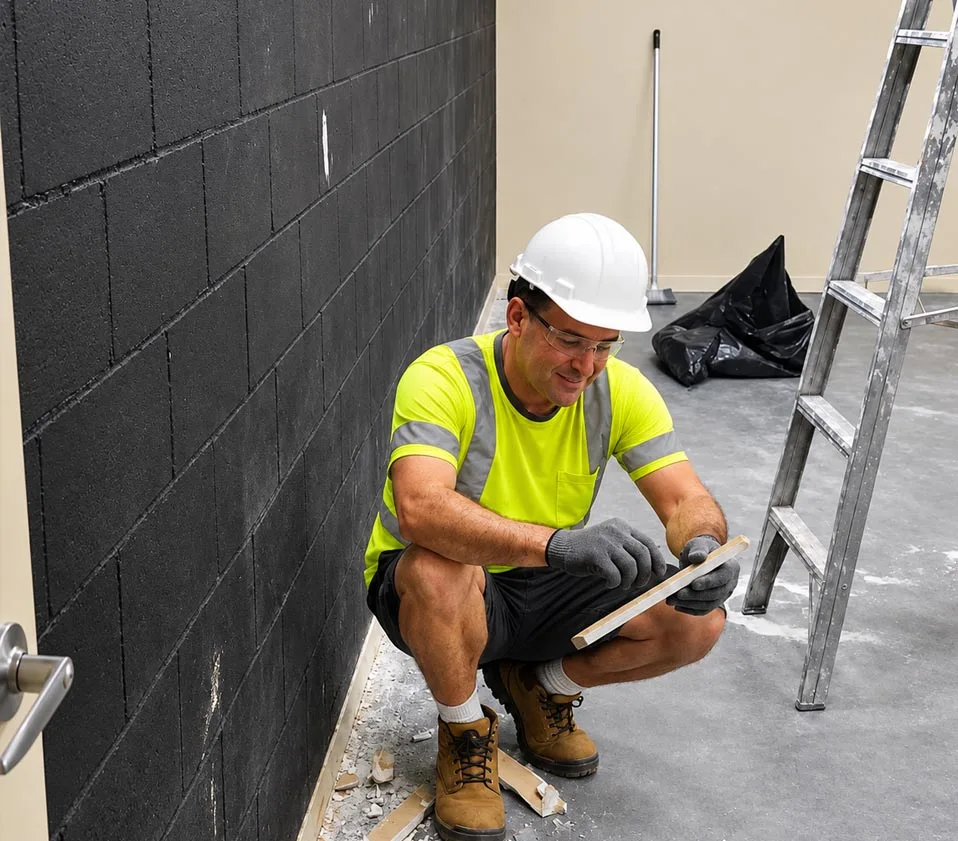
Peter – one of our QBCC Licensed Waterproofer
Dealing with a leaking basement after heavy rain can be frustrating, especially when the same problem keeps coming back.At SSRemedial, we provide professional basement wall waterproofing services for residential and commercial properties throughout Brisbane, the Gold Coast, and surrounding South East Queensland areas.
Whether you’re dealing with water seeping through a basement wall, leaking concrete joints, or persistent moisture coming through the floor, our focus is on identifying the source of the problem and recommending a practical, long-lasting solution. Our basement waterproofing services include concrete crack injection, positive-side and negative-side waterproofing, basement wall waterproofing, and basement floor moisture protection.
We understand that water ingress isn’t always straightforward. That’s why choosing the right waterproofing method starts with understanding how water is entering the building and what is causing it.
If you’ve noticed damp walls, water pooling on the floor, or leaks appearing after heavy rainfall, it’s worth getting the problem checked before further damage develops.
Protect Your Property from Water Damage
Don’t let moisture problems compromise your investment. Contact our experienced team today to arrange a professional assessment and discuss the most effective basement waterproofing solution for your Brisbane or Gold Coast property.
With over 20 years of experience in diagnosing and resolving water leakage issues, our team is supported by QBCC-registered specialists and uses fully NCC-compliant waterproofing systems.