
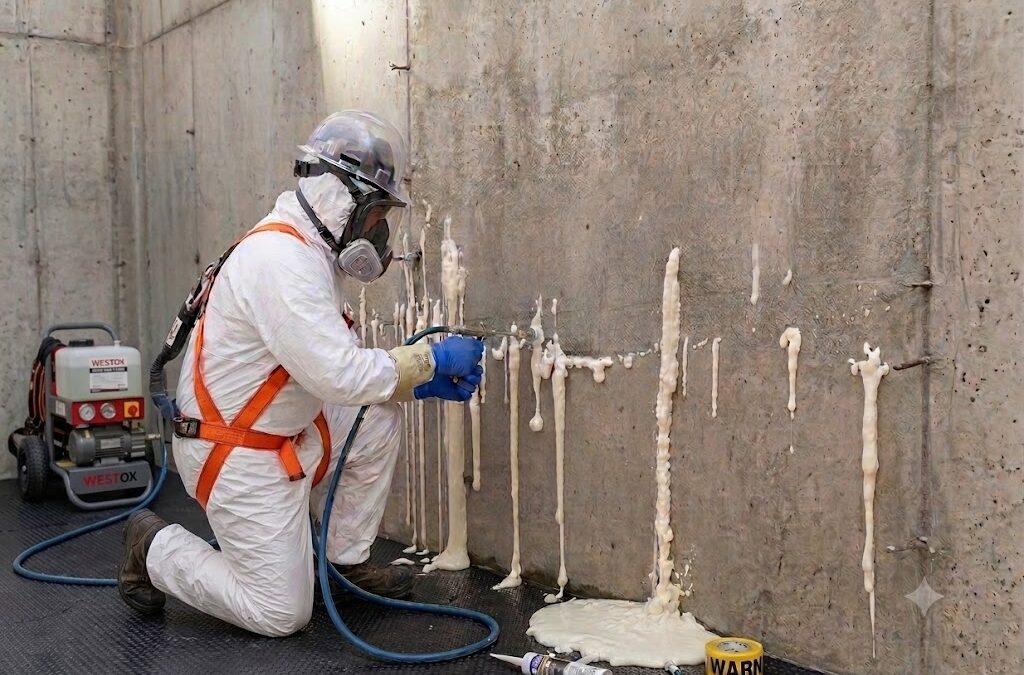
Polyurethane foam injection, also known as PU injection, polyurethane grout injection, PU grouting, injection grouting, urethane injection or resin injection waterproofing, is a specialised method used to stop water infiltration through cracks, joints and voids in concrete.
This concrete crack injection technique is commonly used for foundations, basement walls, retaining walls, lift pits, car parks and other below-ground structures. For Gold Coast waterproofing and concrete leak repairs, polyurethane injection can often provide a practical alternative to excavation because the leaking area may be treated from the accessible side of the structure.
How Polyurethane Foam Injection Works
The PU injection waterproofing process involves injecting liquid polyurethane resin or polyurethane grout into cracks and voids through carefully positioned injection ports.
When a water-reactive polyurethane resin encounters moisture, it reacts and expands. This allows the material to travel through irregular cracks, hairline fractures and hidden voids before curing and creating a durable water-resistant seal.
Why PU Injection Is Effective for Concrete Water Leaks
Polyurethane Grout Expands Into Cracks and Voids
One of the main benefits of polyurethane grout injection is the ability of the material to expand within the leaking area. Rather than simply covering the visible face of a crack, expanding polyurethane grout can penetrate branching cracks, voids and other pathways inside or behind the concrete.
This makes PU foam injection useful for addressing:
- Hairline concrete cracks
- Active water leaks
- Honeycombed concrete
- Construction joints
- Cold joints
- Gaps around pipe penetrations
- Underground water ingress
- Voids behind concrete
- Irregular leak pathways
The aim is to interrupt the water pathway within the structure rather than only patching the point where moisture becomes visible.
Flexible Concrete Crack Sealing
Polyurethane injection differs from rigid epoxy crack injection.
Epoxy is commonly associated with structural crack bonding and repair, while polyurethane injection is often selected when the primary objective is water leak sealing and some minor movement may continue. Once cured, suitable polyurethane grouts retain a degree of flexibility. This allows the seal to accommodate minor thermal expansion, contraction, settlement and normal building movement.
For this reason, flexible crack injection waterproofing can be particularly useful where a rigid surface repair may be more likely to reopen.
Active Water Leak Injection
Certain polyurethane grouts are formulated specifically for active water leak repair.
When injected into a wet or actively leaking crack, the resin reacts with moisture, expands and fills the available pathway. This makes water-reactive polyurethane injection particularly useful for basement leaks, retaining wall leaks, lift pit water ingress and other below-ground waterproofing problems.
Full-Depth Concrete Crack Injection
Water can travel through concrete along complex pathways before appearing on the surface. Correctly positioned injection ports allow polyurethane resin to enter the crack below the surface. Progressive pressure injection grouting can then help distribute the resin through the affected crack or void.
This approach provides a more comprehensive repair than simply applying sealant over the visible surface.
Hydrophobic and Hydrophilic Polyurethane Injection Grouts
Choosing the correct polyurethane injection resin is critical to the performance of the repair. Hydrophobic Polyurethane Grout is commonly used for active water infiltration. These products are designed to resist water after curing and may react rapidly when they encounter moisture. Hydrophilic Polyurethane Grout interacts with water differently and may absorb moisture and swell depending on the formulation.
These products can be useful for certain joints, penetrations and locations exposed to changing moisture conditions. The correct choice between hydrophobic and hydrophilic polyurethane grout depends on the water conditions, crack type, expected movement and requirements of the structure.
Polyurethane Injection vs Epoxy Injection
Although both techniques involve injecting material into concrete cracks, polyurethane injection and epoxy injection are not interchangeable.
- Polyurethane crack injection is commonly chosen for waterproofing because it can expand, seal water pathways and accommodate minor movement.
- Epoxy injection is typically rigid and may be selected where structural bonding of a stable concrete crack is required.
For an active leak, the priority is often stopping water infiltration, which is why PU injection waterproofing is widely used for leaking concrete structures.
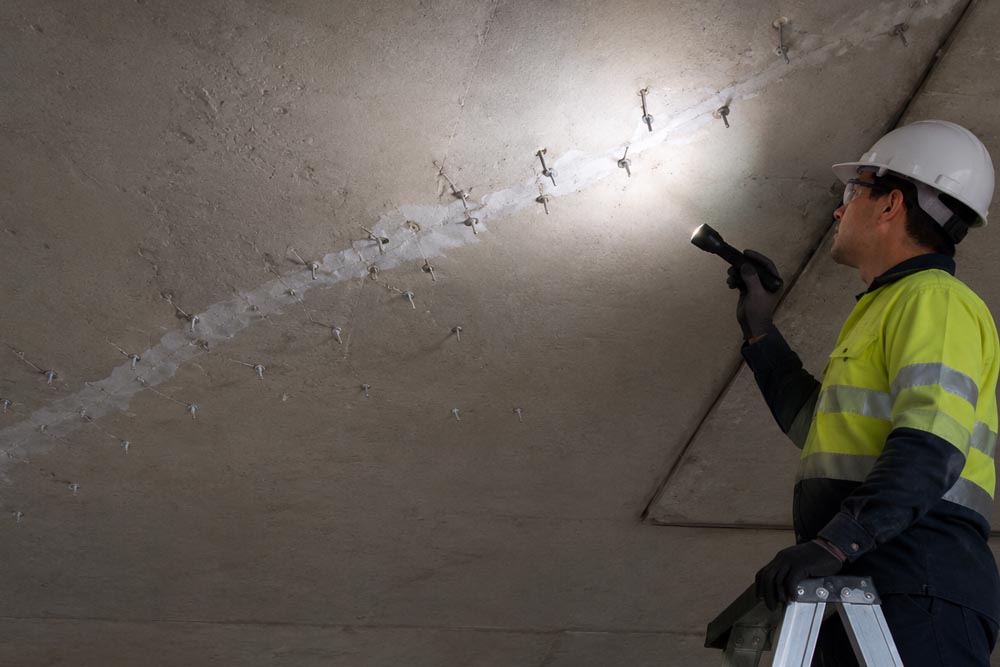
Epoxy Concrete Injection-photo2
What Affects the Success of PU Injection Waterproofing?
- Crack Width and Condition: Hairline cracks, larger cracks, moving joints and actively flowing water can require different polyurethane formulations and injection methods.
- Injection Port Placement: Correct injection port spacing, drilling depth and drilling angle help the polyurethane grout reach the water pathway. Poor port positioning can result in incomplete coverage.
- Injection Pressure: High-pressure polyurethane injection needs to be carefully controlled according to the condition of the concrete, crack geometry and selected resin.
- The goal is controlled resin penetration—not simply applying the highest possible pressure.
- Polyurethane Resin Selection: Different PU injection resins have different reaction times, expansion characteristics, viscosities and flexibility. Selecting a resin suited to the leak conditions is essential for a durable waterproofing repair.
- Temperature and Moisture Conditions: Temperature and moisture can influence reaction and curing times. Professional injection products should be installed according to the manufacturer’s requirements and actual site conditions.
Where Polyurethane Foam Injection Can Be Used
Polyurethane injection waterproofing can be used across a wide range of concrete leak repair applications, including:
- Basement waterproofing
- Lift pit waterproofing and elevator shaft waterproofing
- Retaining wall leak repairs
- Foundation crack injection
- Underground concrete waterproofing
- Concrete tank leak repairs
- Multi-storey car parks
- Construction joint waterproofing
- Cold joint leak repairs
- Pipe penetration sealing
- Penetration waterproofing
- Honeycomb concrete repairs
- Concrete wall crack sealing
- Active water leak repairs
- Below-ground waterproofing
Trenchless Concrete Leak Repair Without Major Excavation
A major advantage of polyurethane foam injection waterproofing is that the repair can often be carried out from the accessible side of the concrete. This makes injection waterproofing a useful option where external excavation would be difficult, expensive or disruptive.
For Gold Coast properties, external access may be restricted by paving, landscaping, swimming pools, neighbouring buildings or other structures. In suitable situations, PU injection leak repair allows the water pathway to be treated without excavating the entire outside face of the wall.
Polyurethane Foam Injection Waterproofing Gold Coast
Water entering through concrete may originate from a crack, construction joint, penetration, void or defect located away from where the leak becomes visible. Effective Gold Coast concrete waterproofing starts with identifying the likely water pathway and assessing the condition of the structure before selecting the appropriate repair method.
When correctly specified and installed, polyurethane grout injection can penetrate difficult-to-reach cracks and voids, stop active water infiltration and create a flexible waterproof seal without unnecessary excavation. For homeowners, builders, body corporates and commercial property managers looking for polyurethane injection waterproofing on the Gold Coast, a professional assessment can determine whether PU injection is suitable for the location, leak conditions and type of concrete structure.