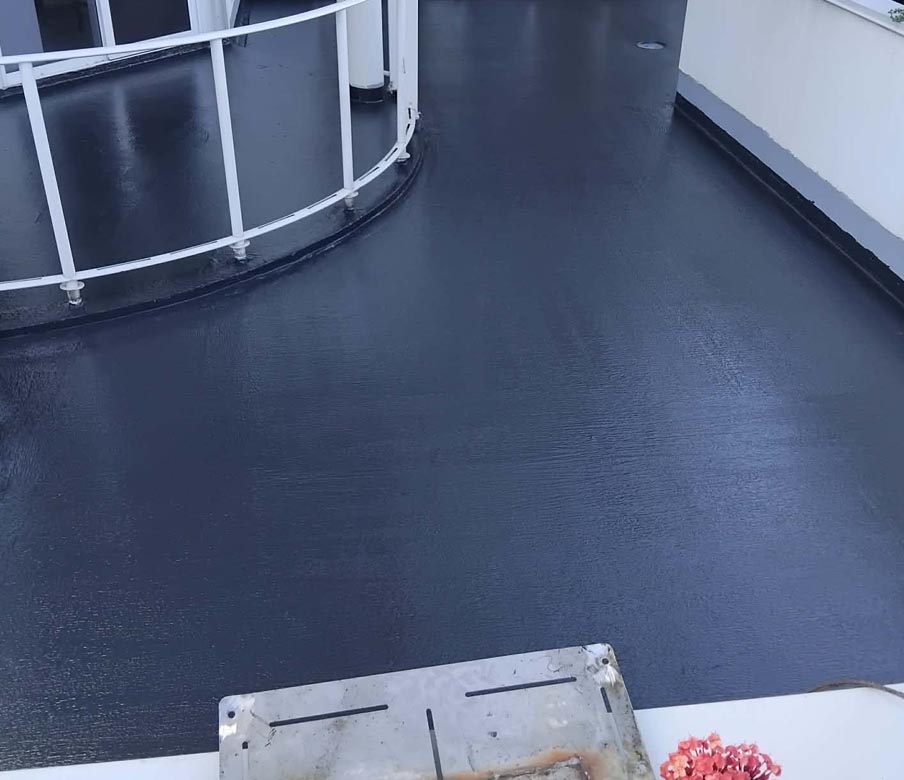

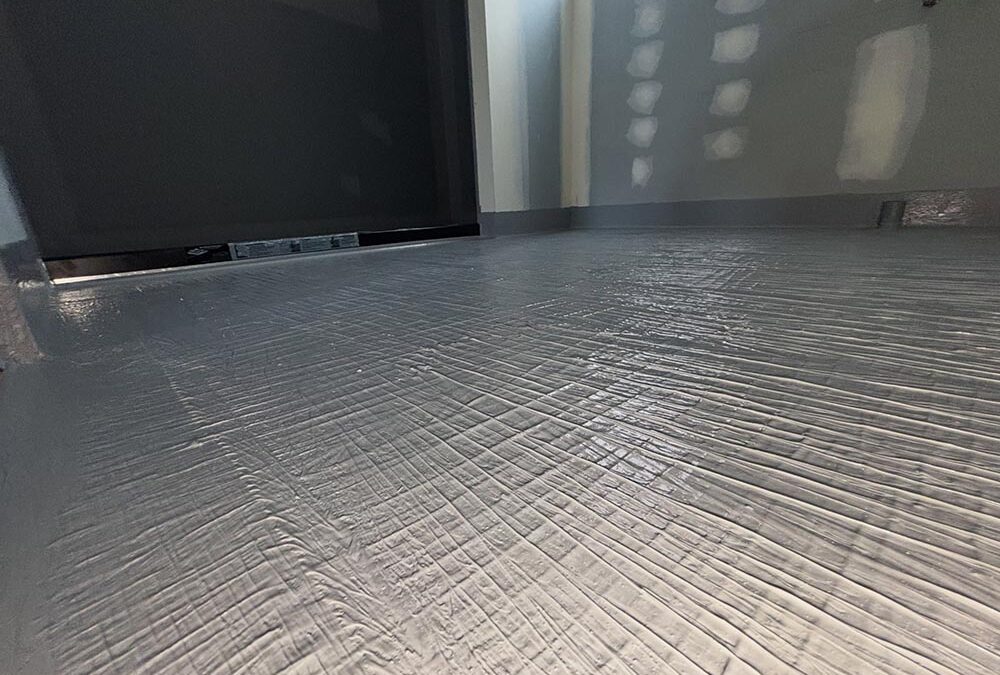
Whether you’re installing TPO, EPDM, PVC roofing membranes, waterproofing systems, or geomembrane liners, protecting the membrane from damage is essential for long-term performance. Even a small puncture or tear can lead to costly leaks, repairs, and premature system failure.
While installation methods vary between products and manufacturers, the following best practices will help reduce the risk of membrane damage throughout the installation process.
Plan Ahead Before Installation
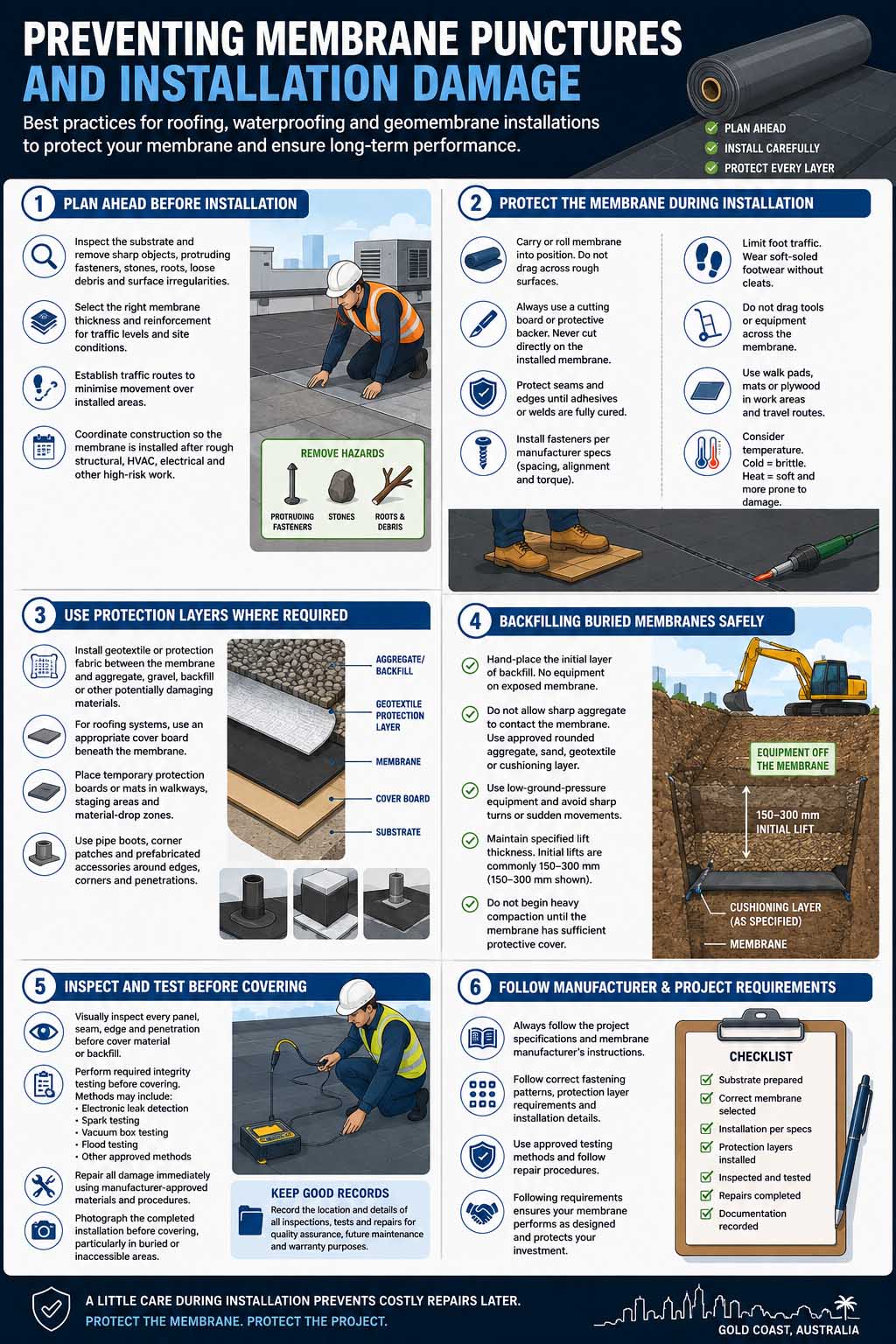
A successful installation starts with proper preparation. Before the membrane is unrolled, inspect the substrate carefully and remove anything that could damage it from underneath. Sharp stones, protruding fasteners, rough concrete, roots, loose debris, and other surface irregularities should all be addressed before work begins.
Choosing the right waterproofing membrane is equally important. Membrane thickness and reinforcement should match the project’s expected traffic levels and site conditions. Areas exposed to frequent foot traffic or rough subgrades often benefit from thicker or scrim-reinforced membranes that offer greater puncture resistance.
It’s also worth planning how people and equipment will move around the site. Designate traffic routes wherever possible and coordinate the construction schedule so the waterproofing membrane is installed after major structural, electrical, HVAC, and other rough-in work. This significantly reduces the chance of damage from dropped tools or construction materials.
Protect the Membrane During Installation
Careful handling goes a long way in preventing accidental damage. Membrane rolls should be carried or rolled gently into place rather than dragged across rough surfaces, where abrasion and tearing can occur.
When trimming the membrane, always place a cutting board or protective backer underneath the work area. Cutting directly against the installed membrane can easily result in accidental punctures that may go unnoticed until much later.
Fresh seams and edges also require extra care. Whether the system uses adhesives or heat welding, these connections remain vulnerable until they have fully cured or reached their designed bond strength. Avoid unnecessary traffic over these areas during this period.
Fasteners should always be installed according to the manufacturer’s specifications for spacing, alignment, and torque. Over-driven, under-driven, or angled fasteners can create stress points that may puncture, tent, or tear the membrane over time.
Foot traffic should also be controlled throughout the installation. Workers should wear soft-soled footwear without cleats, while tools and equipment should be lifted rather than dragged across the membrane. Temporary walk pads, plywood sheets, or protective mats provide valuable protection in work areas and designated access routes.
Weather conditions also play an important role. Cold temperatures can make some membranes brittle and more susceptible to cracking, while excessive heat may soften the material, making it easier to gouge, stretch, or deform during installation.
Use Protection Layers Where Required
Protection layers help shield the membrane from damage both during installation and throughout its service life.
For buried waterproofing systems and geomembranes, geotextiles or protection fabrics should be installed between the membrane and materials such as gravel, aggregate, or backfill that could cause punctures.
In roofing applications, an appropriate cover board installed beneath the roof membrane helps create a smoother surface while improving resistance to impact and substrate irregularities.
Temporary protection boards or mats should also be placed in staging areas, walkways, and material drop zones to minimise the risk of accidental damage during construction.
Special attention should be given to edges, corners, and penetrations. Pipe boots, corner patches, and prefabricated accessories provide stronger, more reliable protection than field-cut details alone and help reduce common leak points.
Backfilling Buried Membranes Safely
When installing buried waterproofing membranes or geomembrane liners, backfilling must be carried out with care.
The first layer of backfill should always be placed by hand, and heavy equipment should never travel directly on the exposed membrane. Sharp aggregate should not come into contact with the membrane unless specifically approved. Instead, use rounded aggregate, sand, geotextile, or another specified cushioning layer where required.
As overburden is placed, use low-ground-pressure equipment and avoid sudden turns or aggressive movements that could shear or stretch the membrane beneath the fill.
Lift thickness should follow the project specifications and manufacturer’s recommendations. Initial lifts are commonly between 150 mm and 300 mm, although project-specific requirements always take priority. Heavy compaction should only begin once the membrane has sufficient protective cover.
Inspect and Test Before Covering
Before any membrane is covered with ballast, overburden, or backfill, perform a thorough inspection of every panel, seam, edge, and penetration. This is the final opportunity to identify and repair visible damage while the membrane remains fully accessible.
Where specified, carry out integrity testing before concealment. Depending on the membrane system, this may include:
- Electronic leak detection
- Spark testing
- Vacuum box testing
- Flood testing
- Other approved project-specific testing methods
Any punctures, tears, or installation defects should be repaired immediately using the membrane manufacturer’s approved repair procedures. Repairs should use compatible materials and provide the specified overlap to restore the system’s waterproof integrity.
It’s also good practice to photograph the completed installation before it is covered, particularly for buried or inaccessible systems. Keeping detailed records of inspections, testing, and repairs provides valuable documentation for quality assurance, future maintenance, and warranty requirements.
Follow Manufacturer and Project Requirements
Every membrane system has its own installation requirements. While these best practices apply across many roofing, waterproofing, and geomembrane applications, the project specifications and manufacturer’s installation instructions should always take precedence.
Following the correct fastening patterns, protection layer requirements, testing procedures, and approved repair methods helps ensure the membrane performs as intended and delivers long-term protection against leaks and water ingress.
- Why Positive-Side Waterproofing Is Still the Best Method for Retaining Walls and Foundations
- What Makes SSR’s Below Ground Waterproofing System an Industry-Leading Solution?
- Why SSR Is a Leading House Damp Proofing Specialist on the Gold Coast and Brisbane
- Preventing Salt Damage with Damp Proofing for Homes and Commercial Buildings
- How can you Tell if your Epoxy Resin Injection for Foundations has Successfully Filled the Entire Crack