
The article explains that heritage and older brick homes manage moisture differently from modern buildings. Many were constructed with breathable materials such as lime mortar, lime plaster, solid brick, and stone. These materials are intended to absorb and release moisture naturally rather than completely block it.
Applying modern non-breathable materials such as dense waterproof coatings or cement-based renders without considering the original construction can trap moisture within the masonry. This may contribute to deteriorating mortar, damaged plaster, and continuing damp problems.
1. What Is Penetrating Damp?
Penetrating damp occurs when moisture from rain or another external source passes through a wall, roof, or another part of the building envelope.
Unlike rising damp, which moves upward from the ground, penetrating damp generally travels horizontally or directly through the building fabric. It is also different from condensation, which results from moisture in indoor air collecting on cold surfaces.
Common warning signs include:
- Damp patches that become worse after rain
- Internal staining or discolouration
- Damp around windows, chimneys, parapets, or other vulnerable areas
- Bubbling, flaking, or crumbling plaster
- Damp patches that do not have the typical low-level tide mark associated with rising damp
The article stresses that the priority should be finding and repairing the actual source of water ingress rather than simply covering the visible damp area. S&S Remedial Services
2. Common Causes of Penetrating Damp in Older Brick Homes
Worn or Failed Mortar Joints
Traditional lime mortar deteriorates gradually. Cracked, porous, or missing mortar joints can allow rainwater deeper into the masonry. Compatible lime-mortar repointing may be needed while maintaining the wall’s ability to breathe.
Cement Mortar Used on Older Brickwork
Modern cement mortar is generally harder and less breathable than traditional lime mortar. When used with softer heritage bricks, it may restrict evaporation and contribute to moisture retention and masonry deterioration.
Damaged Roof and Rainwater Components
Potential causes include:
- Cracked roof tiles
- Failed chimney flashing
- Leaking gutters
- Blocked gutters
- Damaged or overflowing downpipes
These defects can repeatedly direct water onto walls and eventually cause internal dampness.
High or Bridged Ground Levels
Garden beds, paths, paving, or concrete installed too high against the property can sometimes bypass or bridge existing damp protection.
Solutions may involve reducing external ground levels or improving drainage around the structure.
Why Accurate Diagnosis Comes First
The page explains that an older property can have more than one moisture problem simultaneously.
For example, the lower section of a wall could have rising damp while a leaking gutter or cracked external surface introduces penetrating rainwater higher up.
A chemical damp-proof course would therefore not solve water ingress caused by defective flashing, brickwork, roofing, or other external building defects.
The article recommends inspecting both the internal damage and the corresponding external areas. Depending on the situation, diagnosis may involve:
- Moisture readings
- Moisture mapping
- Salt analysis
- Controlled water testing
- Thermal imaging
Effective Penetrating Damp Solutions
The article describes S&S Remedial’s approach as identifying the water-entry mechanism first and then selecting a repair appropriate to the substrate and property.
1. Inspect and Identify the Source
Before waterproofing or repairs begin, the source and pathway of moisture should be established.
S&S Remedial states that site inspections, moisture mapping, and thermal imaging may be used where appropriate, particularly where the visible internal damp patch is not directly opposite the external defect.
2. Repair Cracks and Joints
Cracks in concrete, masonry, render, or building joints can allow water directly into the structure. Depending on the substrate and crack condition, the article lists solutions including:
- Structural crack repairs
- Joint restoration
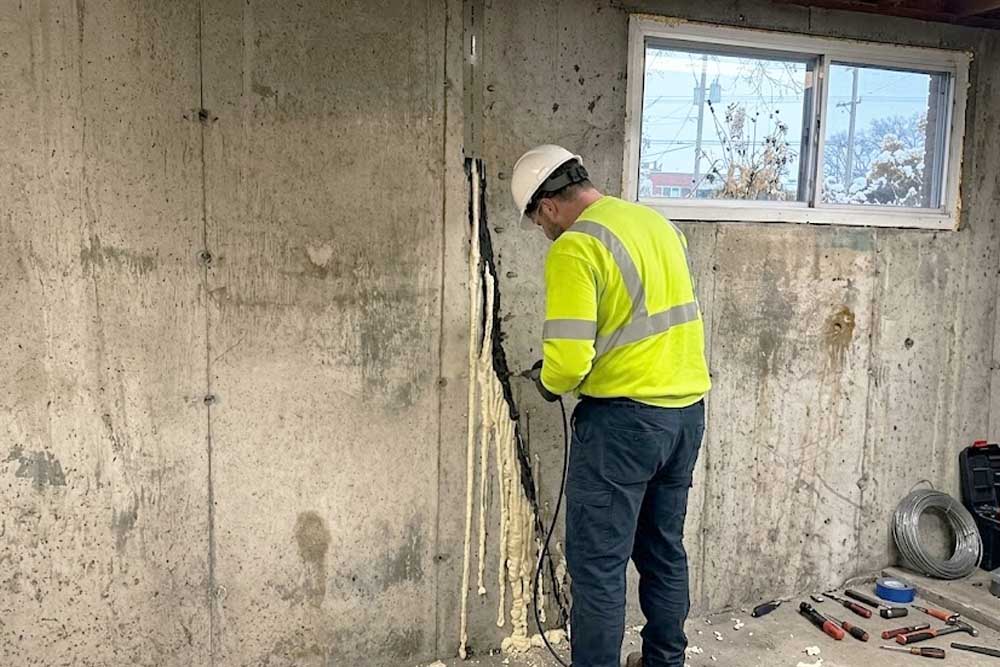
- Concrete crack injection
- Polyurethane resin injection
- Epoxy Resin injection
- Joint and penetration sealing
It also points out that an active concrete leak may require a different treatment from cracking in traditional brickwork.
3. Repair Roof and Flashing Leaks
Water appearing on a wall may actually originate higher in the building.
Possible treatments include:
- Roof repairs
- Flashing repairs
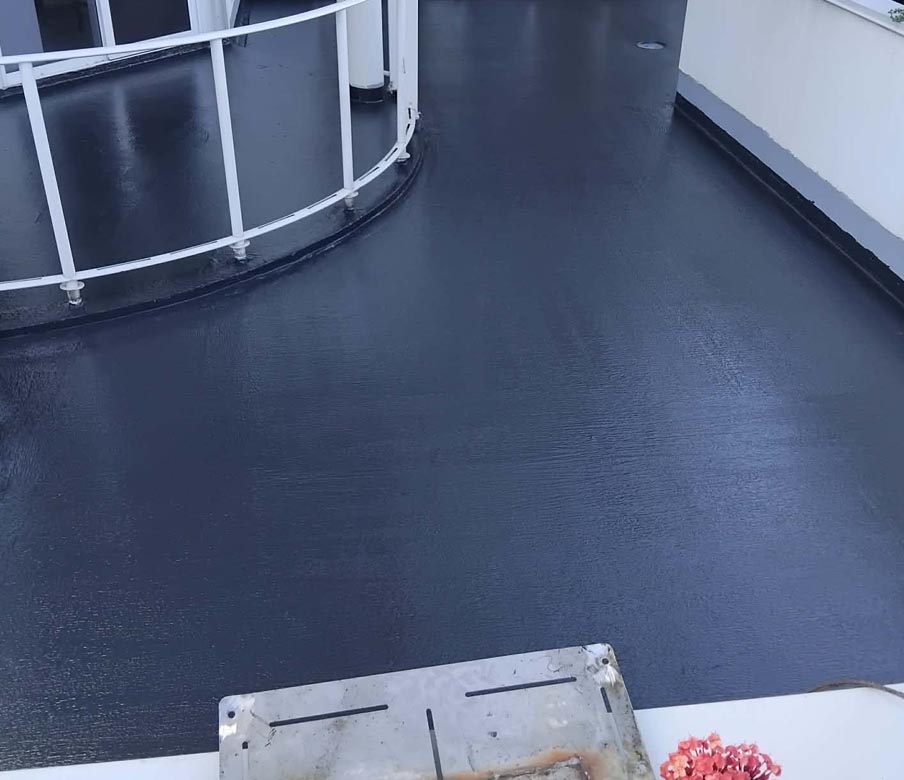
- Waterproof membrane repairs
- Rooftop waterproofing
- Terrace waterproofing
- Gutter and downpipe repairs
The source should be stopped before damaged internal finishes are restored.
4. Seal Windows, Doors and Penetrations
Failed sealant around windows, doors, vents, pipes, and other penetrations can become direct pathways for rainwater.
The article describes joint restoration, caulking, and sealant replacement as potential treatments, while emphasising correct surface preparation rather than simply applying new sealant over deteriorated material.
5. Repair or Replace Failed Waterproofing Membranes
Where an existing waterproofing system has failed, simply repairing masonry may not stop the water.
S&S Remedial lists capabilities including:
- Membrane repairs
- Waterproof membrane replacement
- Foundation waterproofing
- Retaining wall waterproofing
- Concrete Rooftop waterproofing
- Balcony and terrace waterproofing
- Negative-side basement waterproofing
For heritage masonry, the article cautions against automatically applying dense waterproof coatings without considering how they will affect moisture movement through the original materials.
6. Improve Drainage and Ground Conditions
Keeping water away from the building can sometimes be more effective than treating the wall itself.
Potential contributing factors include:
- Poor site grading
- Blocked drainage
- Raised garden beds
- Surface water discharging beside the building
- Poor stormwater management
Improved drainage can reduce moisture exposure and lessen pressure on waterproofing systems.
7. Treat Below-Ground Water Ingress
Basements, foundations, retaining walls, lift pits, and similar structures can experience water ingress due to groundwater and hydrostatic pressure.
Depending on the conditions, the article lists:
- Negative-side waterproofing
- Polyurethane crack injection
- Epoxy crack injection
- Foundation waterproofing
- Drainage systems
- Waterproof membrane systems
More severe hydrostatic-pressure problems may require an integrated waterproofing system instead of a simple surface repair. S&S Remedial Services
S&S Remedial’s Approach: Start With the Least Invasive Solution
One of the main principles presented on the page is to start with the least invasive suitable repair.
For example, the first stage could involve fixing:
- Roof leaks
- Flashing
- Cracked render
- Drainage
- Window seals
- Failed joints
- Other identifiable entry points
Only where necessary would treatment progress to more involved methods such as crack injection, waterproof membranes, negative-side waterproofing, drainage installations, or other specialist remedial work.
This is particularly relevant to heritage masonry because unnecessarily aggressive waterproofing can interfere with the natural moisture behaviour of traditional construction. S&S Remedial
How Much Does Penetrating Damp Cost to Fix?
The page does not provide a fixed price because the repair cost depends heavily on the source and extent of the problem.
For example, resealing a failed window joint may involve comparatively minor work, whereas the following would generally require a substantially larger scope:
- Extensive cracking
- Failed waterproofing membranes
- Below-ground water ingress
- Hydrostatic pressure
- Salt-damaged masonry
- Extensive internal restoration
The recommended starting point is therefore an inspection that identifies the source before a repair scope is prepared.
Conclusion
The article’s central message is that penetrating damp should be treated by finding and stopping the source of water ingress rather than simply sealing the visible damp area. For older and heritage brick buildings, the repair should also respect the breathability and moisture-management characteristics of the original construction materials. The page finishes with a call to action encouraging property owners experiencing water ingress to request an inspection from S&S Remedial for an appropriate penetrating damp solution.