
Pressure injection grouting is a proven method for stopping water leaks, filling concealed voids and sealing cracks in concrete structures. While the process itself involves injecting a specialised grout or resin into cracks and gaps, improvements in injection equipment, polyurethane formulations and leak detection have made modern repairs more precise, reliable and less disruptive.
For property owners, builders and facility managers across Brisbane, the Gold Coast, Logan and surrounding areas, pressure injection grouting can often provide a targeted alternative to extensive excavation, demolition or removal of existing finishes.
Advanced Polyurethane Injection Resins
One of the biggest improvements in pressure injection grouting has been the development of specialised polyurethane injection resins. These materials are designed to penetrate narrow cracks and, depending on the formulation, react with moisture and expand to seal pathways where water is entering the structure.
Different polyurethane resins can be selected to suit the conditions of the leak or crack:
- Hydrophobic polyurethane resin is commonly used where a durable, water-resistant seal is required.
- Hydrophilic polyurethane resin interacts with water and can be suitable for certain wet cracks, joints and water ingress problems.
- Flexible polyurethane resin can accommodate a degree of movement after curing.
- Fast-reacting polyurethane resin can help control active leaks and higher-flow water ingress.
Choosing the right injection resin is critical. A product designed to stop water ingress is not necessarily suitable for structural bonding, so the crack, surrounding concrete and source of the leak should be properly assessed before injection work begins.
Precise Pressure-Controlled Injection Equipment
Modern injection pumps give technicians much greater control over pressure and flow rates. Rather than simply forcing grout into a crack at maximum pressure, the resin can be injected gradually while its movement through the crack is carefully monitored. This controlled approach helps the polyurethane resin travel through the crack network while reducing the risk of damaging weakened concrete or pushing material into areas where it isn’t required.
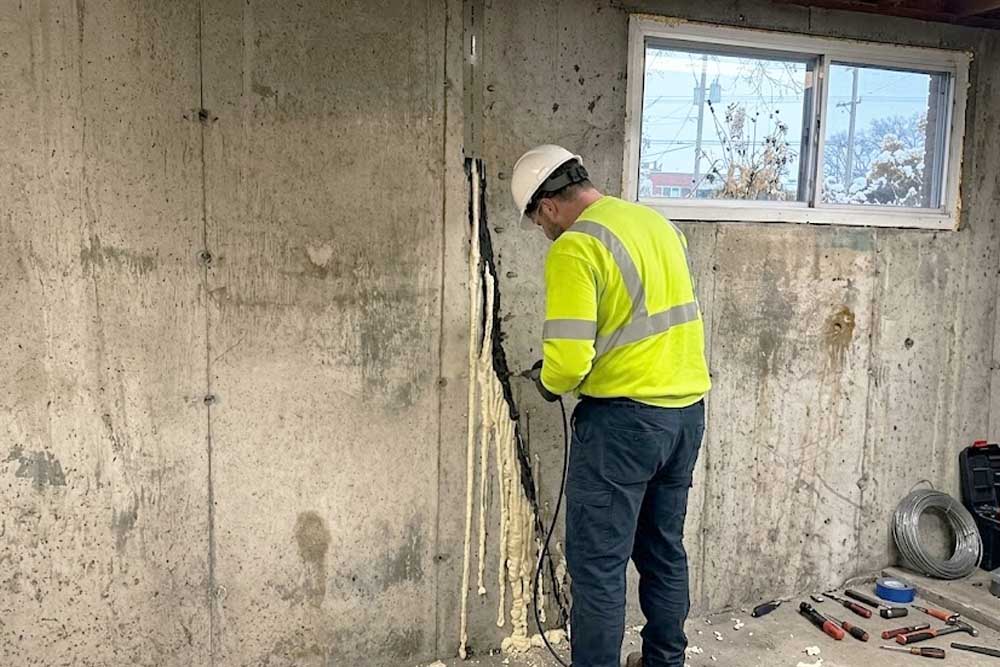
Depending on the location and nature of the crack, injection may begin at a lower point and progress systematically through a series of strategically positioned injection packers.
Pressure injection grouting can be particularly effective for water leaks affecting:
- Basement and foundation walls
- Retaining walls
- Lift pits and elevator shafts
- Underground car parks
- Construction joints
- Concrete slabs
- Block walls
- Other below-ground concrete structures
- Better Injection Packers and Accessories
Injection packers create the connection between the injection pump and the crack being treated. Improvements in packer design give technicians better control over where and how polyurethane or epoxy resin enters the structure.
Mechanical packers can be installed into drilled holes when higher injection pressures are needed. Surface-mounted injection ports may be more appropriate when drilling is undesirable or when the crack needs to be treated with minimal disturbance to the surrounding concrete.
Modern hoses, valves and couplings also provide greater control over resin delivery, helping reduce waste and maintain consistent pressure throughout the repair.
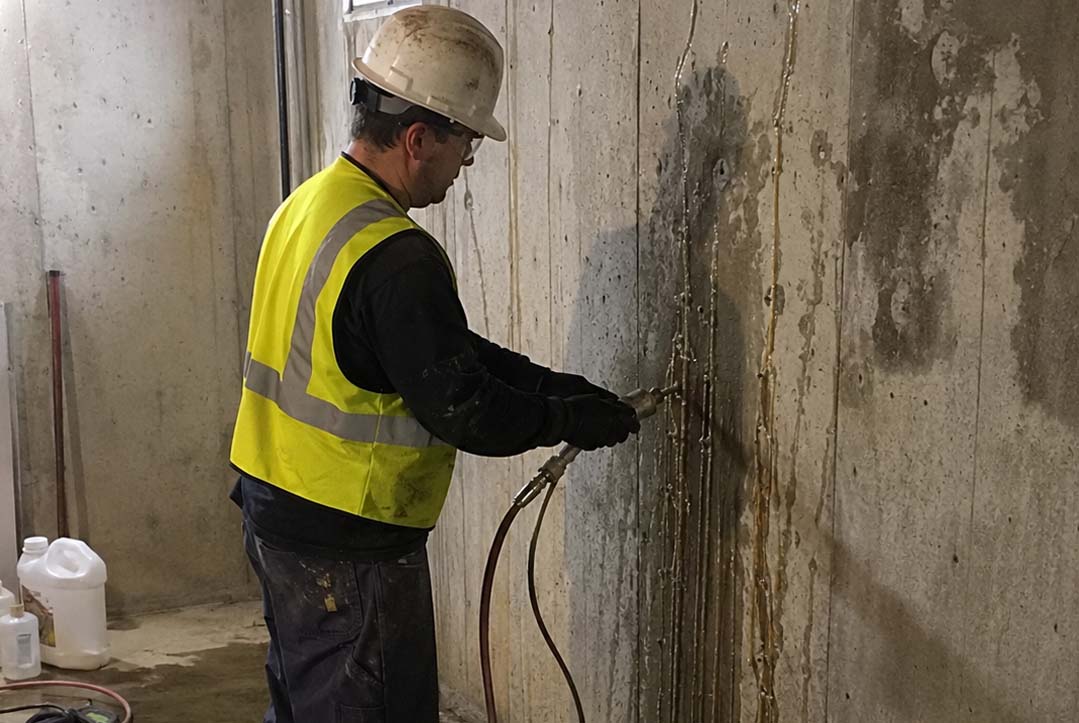
High-pressure Injection Grouting
Better Leak Detection and Repair Planning
Effective leak repairs start with finding the actual source and pathway of the water ingress.
A wet patch on a basement wall, for example, doesn’t necessarily mean water is entering directly behind that spot. Water can migrate through concrete cracks, construction joints, penetrations and porous sections of the structure before becoming visible somewhere else.
Depending on the situation, assessment methods can include
- moisture testing,
- thermal imaging,
- crack mapping and
- controlled water testing.
These techniques help establish the extent of the problem and determine where injection points should be positioned.
At S&S Remedial, the crack condition and likely source of water ingress are assessed before an injection method is recommended. This helps reduce guesswork and ensures the repair addresses the likely water pathway rather than simply treating the visible signs of a leak.
Polyurethane vs Epoxy Crack Injection
Polyurethane and epoxy injection resin can both play an important role in concrete crack repairs, but they serve different purposes.
Polyurethane crack injection repair is generally suited to stopping active water leaks. Depending on the product used, polyurethane can expand within the crack and retain some flexibility after curing. This makes it particularly useful for waterproofing leaking concrete cracks and joints.
However, polyurethane injection should not automatically be considered a structural concrete repair.
Epoxy crack injection repair is generally used where a dry, stable crack requires structural bonding. Once cured, epoxy creates a rigid bond within the concrete. For this reason, it is typically unsuitable for cracks that remain wet or are subject to ongoing movement.
Some remedial projects may involve using polyurethane injection first to control water ingress, followed by a separate structural repair where required. The appropriate material and repair sequence depend on the condition and cause of the crack.
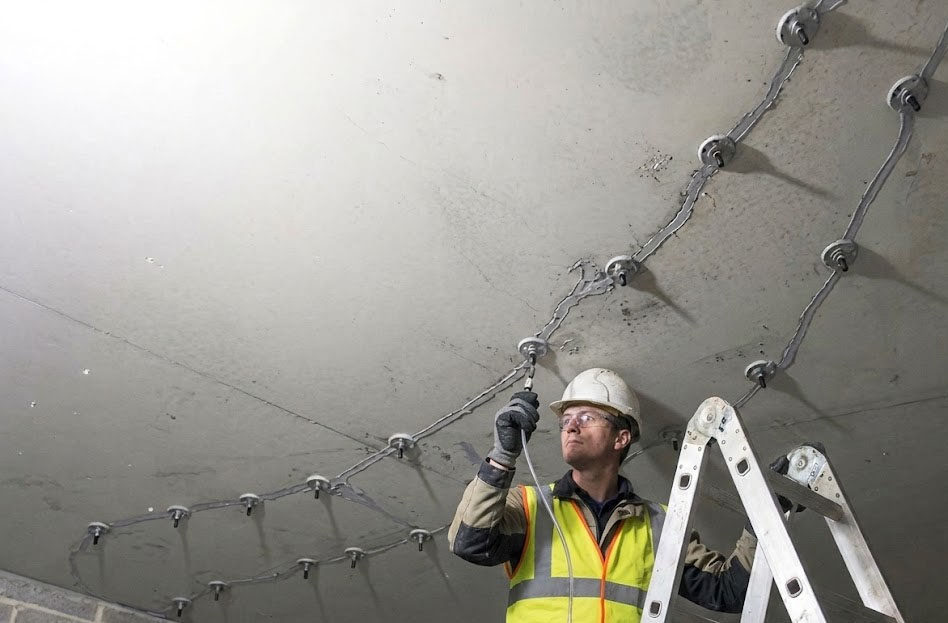
Basement foundation via epoxy resin injection
Targeted Leak Repairs With Less Disruption
One of the biggest advantages of pressure injection grouting is that it can be relatively non-invasive compared with classic waterproofing repairs.
Where site conditions allow, leaking cracks may be treated from the internal or negative side of the structure. This can reduce the need to excavate around foundations, expose external waterproofing membranes or remove large areas of existing finishes.
For suitable repairs, the benefits can include:
- Less demolition and excavation
- Faster, more targeted leak repairs
- Reduced disruption to residents, tenants or business operations
- Treatment of concealed water pathways
- Less reinstatement work once repairs are complete
Pressure injection grouting does have its limitations. It won’t correct ongoing foundation movement, significant concrete displacement or every problem associated with hydrostatic pressure. Cracks that are recurring, displaced, horizontal or potentially structural may need further investigation, including assessment by a structural engineer and additional remedial work.
Pressure Injection Grouting in Brisbane, Gold Coast and Logan
With more than 20 years of remedial experience, S&S Remedial provides polyurethane and epoxy crack injection for residential, commercial and below-ground concrete structures across Brisbane, the Gold Coast and Logan.
Our polyurethane crack injection services are primarily used to seal leaking concrete cracks, joints and other pathways allowing water ingress. For suitable dry and stable structural cracks, epoxy injection may be recommended instead. By combining thorough meticulous leak assessment, controlled pressure injection grouting techniques and materials selected for the actual site conditions, S&S Remedial provides targeted solutions for concrete water ingress and deterioration.
If you’re dealing with a leaking basement, retaining wall, lift pit, foundation, construction joint or other concrete structure, contact S&S Remedial to arrange an inspection. We’ll assess the source of the leak and determine whether pressure injection grouting is the right solution for your property.