
Rising damp can be a frustrating problem for property owners, especially when damp patches, peeling paint and crumbling plaster keep returning despite repeated repairs. In many cases, the problem starts when ground moisture travels upwards through porous brickwork and mortar because the building’s original damp-proof course is missing, damaged or no longer functioning properly.
Damp course injection offers a practical way to control this moisture without removing large sections of masonry. The treatment involves introducing a specialised chemical damp-proofing cream or liquid into the lower part of the wall to create a water-repellent barrier.
For homes and commercial buildings across Brisbane, the Gold Coast and surrounding South East Queensland areas, professional chemical damp proof course injection can be an effective rising damp treatment when the underlying cause has been correctly identified.
What Is a Damp Proof Course (DPC)?
A Damp Proof Course (DPC) is a horizontal moisture barrier installed near the base of a masonry wall. Its purpose is to prevent groundwater from moving upwards through bricks, mortar and other porous building materials.
In modern construction, a physical DPC may consist of a plastic membrane or another suitable moisture-resistant material. Older buildings may have slate, bitumen-based barriers or other traditional damp-proofing materials.
However, these barriers can become ineffective when they deteriorate, are incorrectly installed or are bridged by raised ground levels, paving, render or landscaping.
When installing a replacement physical barrier would require extensive masonry work, chemical DPC injection may provide a less disruptive alternative.
How Does Rising Damp Develop in Brick and Masonry Walls?
Brickwork and mortar contain microscopic pores that can absorb and transport water. When these materials remain in contact with moisture from the ground, water can gradually travel upwards through a process known as capillary action.
Think of a paper towel absorbing water from a wet surface. The same basic principle explains how moisture can move through porous masonry.
Without an effective damp-proof barrier, rising moisture may cause:
- Damp patches and staining near the bottom of walls
- Bubbling, peeling or flaking paint
- Crumbling plaster and deteriorating render
- White salt deposits known as efflorescence
- Musty odours and persistent dampness
- Damage to skirting boards and adjoining finishes
These symptoms do not always mean a property has rising damp. Leaking plumbing, condensation, penetrating rainwater and defective drainage can produce similar problems.
A professional moisture assessment is essential before recommending damp course injection.
How Does Chemical Damp Course Injection Actually Work?
Chemical damp course injection works by changing how moisture interacts with the microscopic pores inside masonry.
A specialised damp-proofing cream or liquid, commonly formulated with silane or siloxane active ingredients, is introduced into a continuous mortar joint near the base of the affected wall.
The treatment gradually distributes through the surrounding mortar and masonry, creating a hydrophobic, or water-repellent, zone.
Unlike a surface coating, the chemical treatment works within the masonry itself. It reduces the ability of the treated pores to absorb and transport liquid water through capillary action.
When correctly installed, and where the masonry and product are suitable, the overlapping treatment zones form a continuous chemical damp-proof barrier that restricts rising ground moisture.
Importantly, the treatment does not need to block every pore or make the wall completely impermeable. Its purpose is to interrupt capillary moisture movement while allowing the masonry to dry progressively.
The Six-Step Damp Proof Course Injection Process
1. Damp Inspection and Moisture Assessment
Before any drilling begins, the affected walls and surrounding areas are inspected to identify the likely source of moisture.
This may involve examining existing damp-proof courses, external ground levels, drainage conditions, plumbing, wall finishes and moisture patterns.
The assessment helps establish whether the problem is genuine rising damp or another form of water ingress requiring a different treatment.
2. Drilling the DPC Injection Holes
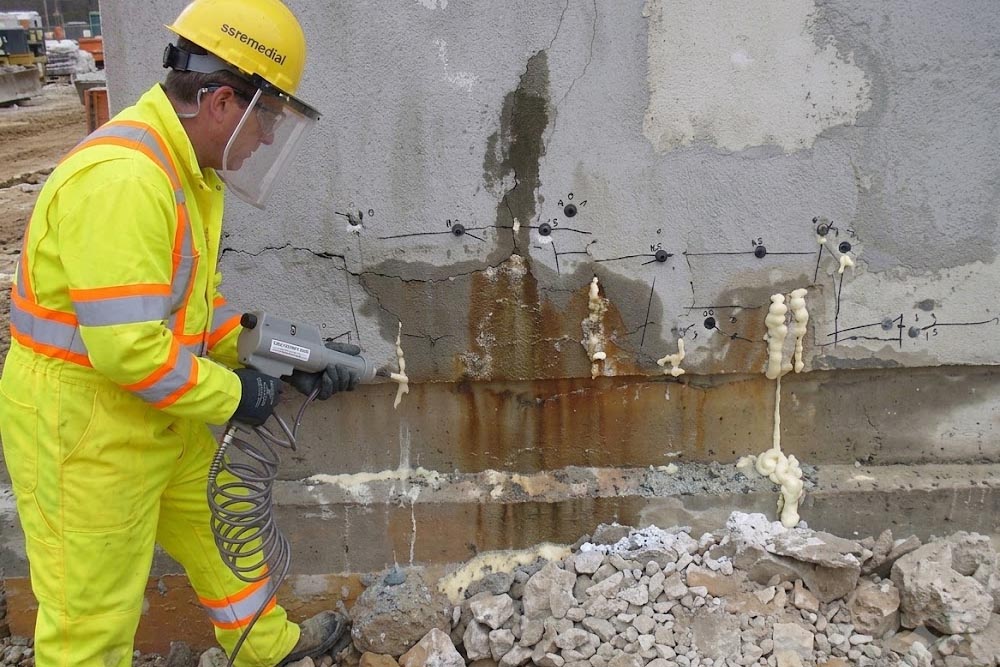
Once the appropriate treatment level has been determined, small holes are drilled into a suitable continuous mortar joint.
For some chemical DPC systems, the holes are approximately 10–12 mm in diameter, with spacing commonly around 100–120 mm, although the exact dimensions depend on the manufacturer’s instructions and wall construction.
The new damp-proof course is generally positioned to maintain suitable clearance above external ground level, commonly around 150 mm where applicable.
Correct hole spacing, depth and placement are important for achieving consistent chemical distribution.
3. Injecting the Damp-Proofing Cream or Liquid
A professional-grade silane- or siloxane-based damp-proofing product is introduced into the prepared holes.
Depending on the selected system, application may involve injection cream, controlled low-pressure delivery or another manufacturer-approved method.
The quantity and placement of the product must be appropriate for the wall thickness, masonry condition and treatment specifications.
4. Allowing the Chemical DPC to Spread
After application, the chemical treatment distributes through the mortar and surrounding masonry.
The objective is for neighbouring treatment zones to overlap and form a continuous water-repellent layer.
This stage is particularly important because untreated gaps can allow capillary moisture to continue moving upwards.
The distribution and curing period will depend on the formulation, substrate and environmental conditions.
5. Forming the Hydrophobic Moisture Barrier
As the active ingredients interact with the mineral surfaces inside the masonry, they create water-repellent properties within the treated pores.
This reduces capillary suction and restricts the upward movement of liquid groundwater.
The result is an injected damp-proof course designed to perform the moisture-control function of a traditional physical DPC.
6. Allowing the Affected Walls to Dry
Once the injected barrier becomes effective, moisture above the treated level can gradually dissipate, provided other sources of water ingress have also been addressed.
However, damp walls do not dry immediately.
Drying times depend on the thickness of the masonry, the original moisture content, ventilation, humidity, weather conditions and the type of wall finishes.
Salt-contaminated plaster or render may also require separate remedial treatment before repainting or restoring the wall.
Chemical Damp Course Injection vs Traditional Damp Proof Course
Both methods are designed to interrupt rising moisture, but their installation methods and applications differ.
| Feature | Traditional Physical DPC | Chemical DPC Injection |
|---|---|---|
| Main purpose | Prevent capillary moisture rising through walls | Restore a moisture barrier in suitable existing masonry |
| Materials | Plastic membrane, slate, bitumen or other physical barriers | Silane- or siloxane-based cream or liquid |
| Installation | Usually installed during construction or through masonry alteration | Applied through drilled holes in existing masonry |
| Disruption | Replacement can involve substantial building work | Generally less invasive |
| Main application | New construction and selected remedial projects | Existing masonry with confirmed rising damp |
| Limitations | Requires correct continuity and detailing | Depends on substrate suitability and correct application |
Chemical damp course injection is particularly useful for suitable existing brick and masonry walls where replacing a physical DPC would be difficult or disruptive.
However, neither method will resolve moisture problems caused by leaking pipes, condensation, lateral water penetration or drainage defects unless those issues are also addressed.
Why Damp Course Injection May Need Salt Damp Treatment
One issue that homeowners often overlook is the salt contamination left behind by rising damp.
As groundwater moves through brickwork and mortar, it can carry dissolved mineral salts into the wall. When moisture evaporates, these salts remain within the masonry and plaster.
Some salts absorb moisture from the surrounding air, while others crystallise and contribute to the breakdown of plaster, paint and render.
This means a wall may continue showing signs of dampness even after a new chemical damp-proof course has been installed.
Depending on the condition of the wall, additional remediation may include removing damaged plaster, treating salt contamination and applying suitable salt-resistant render or replacement finishes.
For properties with extensive salt damage, a complete rising damp treatment should address both the moisture pathway and the materials already affected.
Damp Proof Course Repairs for Gold Coast and Brisbane Properties
Properties across Brisbane and the Gold Coast can experience moisture problems associated with heavy rainfall, high humidity, drainage defects and changing ground conditions.
Older brick homes, ground-floor masonry walls and buildings with raised garden beds or paving against external walls may be particularly vulnerable to moisture problems where an existing DPC has been bridged or compromised.
However, not every damp wall requires chemical injection.
A proper assessment should determine whether moisture is rising from the ground, entering laterally through an external wall or originating from another source.
Where rising damp is confirmed, professional damp proof course repairs can help restore moisture protection while minimising unnecessary demolition and disruption.
Professional Damp Proof Course Installation and Rising Damp Treatment
Successful damp course injection involves more than drilling holes and applying chemicals.
The type of brickwork, mortar condition, wall thickness, existing moisture levels, injection height, drilling pattern and product selection all influence the performance of the treatment.
At S&S Remedial Services, we provide professional rising damp assessments and remedial damp-proofing solutions for residential and commercial properties across Brisbane, the Gold Coast and surrounding areas.
Our approach focuses on identifying the source of moisture before selecting an appropriate treatment, which may include chemical DPC injection, salt damp remediation, waterproofing repairs or improvements to existing moisture-control systems.
Frequently Asked Questions About Damp Course Injection
Does damp course injection permanently stop rising damp?
A correctly designed and installed chemical DPC can provide long-term protection against capillary rising damp in suitable masonry. However, its effectiveness depends on the product, wall construction, installation quality, and whether other moisture sources or DPC bridging have been addressed.
Is damp course injection suitable for all walls?
No. Chemical DPC injection is primarily used for suitable porous masonry. Rubble-filled walls, certain stone constructions, and unusual wall assemblies may require specialist assessment or alternative treatments.
How long does a wall take to dry after DPC injection?
Drying may take several months or longer, depending on the wall thickness, moisture content, ventilation, and environmental conditions. Salt-contaminated finishes may also need replacement.
Is chemical damp proof course injection invasive?
It is generally considered a minimally invasive treatment because it requires small drilled holes rather than removing entire sections of masonry. However, additional plaster removal or wall repairs may be necessary.
Can damp course injection stop basement leaks?
Not all basement leaks. Chemical DPC injection targets capillary rising damp in suitable masonry. Water entering through concrete cracks, construction joints, or below-ground walls under hydrostatic pressure may require polyurethane injection, membrane waterproofing, drainage improvements, or other remedial systems.
Need Professional Damp Course Injection or Rising Damp Repairs?
Persistent dampness can damage plaster, paintwork, skirting boards, and masonry finishes if the underlying moisture problem remains untreated.
At S&S Remedial Services, we assess damp problems and provide targeted rising damp treatment and damp-proofing solutions for properties across Brisbane and the Gold Coast.
Whether your property requires chemical damp course injection, salt damp treatment, or another remedial waterproofing solution, our team can help identify the cause and recommend an appropriate repair method.
Contact S&S Remedial Services today to arrange a professional damp assessment and discuss the right treatment for your property.