
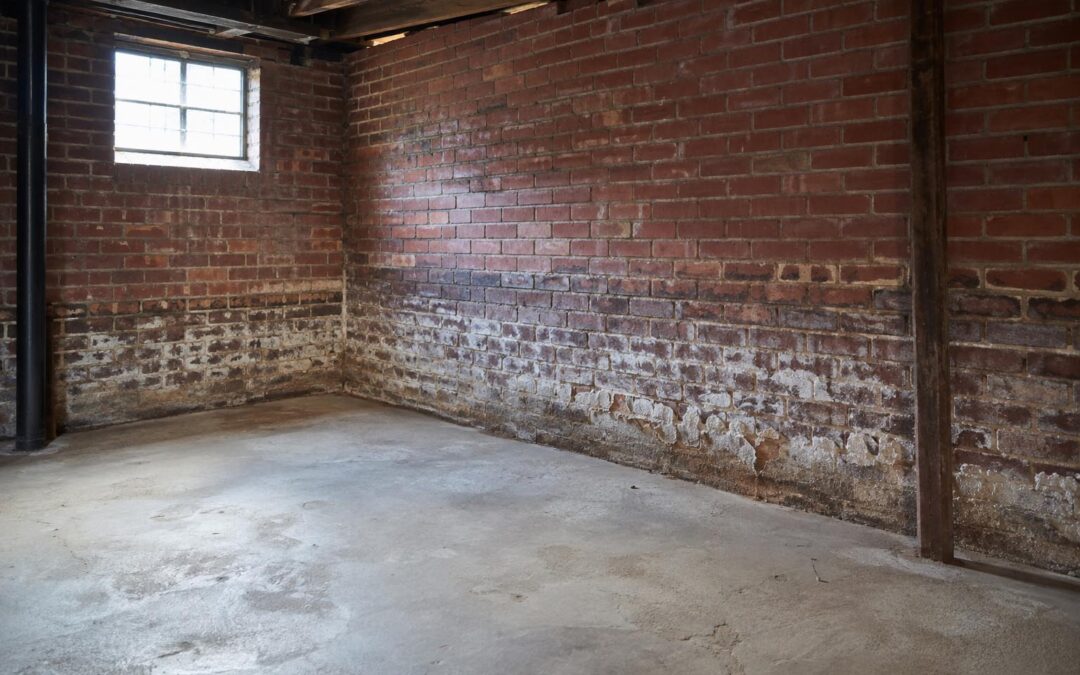
Efflorescence is the white, powdery or crystalline residue that can appear on brickwork and mortar. It forms when moisture moves through the masonry, picks up soluble salts and carries them to the surface. As the moisture evaporates, the salts are left behind.
While efflorescence itself does not cause rising damp or waterproofing failure, it is often a clear sign that unwanted moisture is moving through the wall. Simply cleaning off the white deposits may improve the appearance temporarily, but they are likely to return if the underlying moisture problem is not addressed.
For Gold Coast properties, where heavy rainfall, humidity and groundwater can contribute to moisture issues, effective treatment starts with finding out where the water is coming from.
1. Identify the Source of Moisture
Before treating efflorescence, the brickwork should be properly inspected to determine how moisture is entering or moving through the wall.
Common causes include:
- Rising damp from the ground
- A missing, damaged or bridged damp-proof course (DPC)
- Lateral water penetration through basement or below-ground walls
- Cracked brickwork or deteriorated mortar joints
- Leaking gutters, downpipes or plumbing
- Failed or deteriorated external waterproofing
- Soil, garden beds or paving sitting too high against the wall
- Poor surface water drainage
- Hydrostatic pressure against retaining or below-ground walls
The location of the efflorescence can provide useful clues. White salt deposits and visible tide marks around the base of a wall may indicate rising damp. Dampness or efflorescence spread across a basement or retaining wall is more likely to point to lateral water penetration.
Correctly identifying the cause is important because rising damp, penetrating water and below-ground waterproofing failures require different repair methods.
Stop Efflorescence for Good
Protect your brickwork with expert remedial solutions. Get lasting treatment and restore your property’s durability today.
xxxx
2. Remove Efflorescence and Salt Contamination
Once the source of moisture has been identified and repaired, loose efflorescence can usually be removed with a stiff, non-metallic brush.
Wire brushes are best avoided, as they can scratch the brick surface and may leave behind metal particles that cause staining. More stubborn deposits may require clean water or a suitable masonry-cleaning product. Always test cleaning products on a small, inconspicuous section first. Strong acids and aggressive pressure washing should also be avoided unless recommended by a waterproofing or masonry professional. Incorrect cleaning can damage brick faces, weaken mortar joints and create additional problems.
Where salt contamination has travelled deeper into the masonry, treatment may involve:
- Removing damaged or salt-affected paint, render or plaster
- Using a desalination poultice to draw salts out of the masonry
- Applying a suitable salt-retarding treatment
- Repointing damaged or deteriorated mortar joints
- Allowing sufficient drying time before replacing finishes
Removing the visible salts is only part of the process. The moisture feeding the efflorescence also needs to be stopped.
3. Treat Rising Damp at the Source
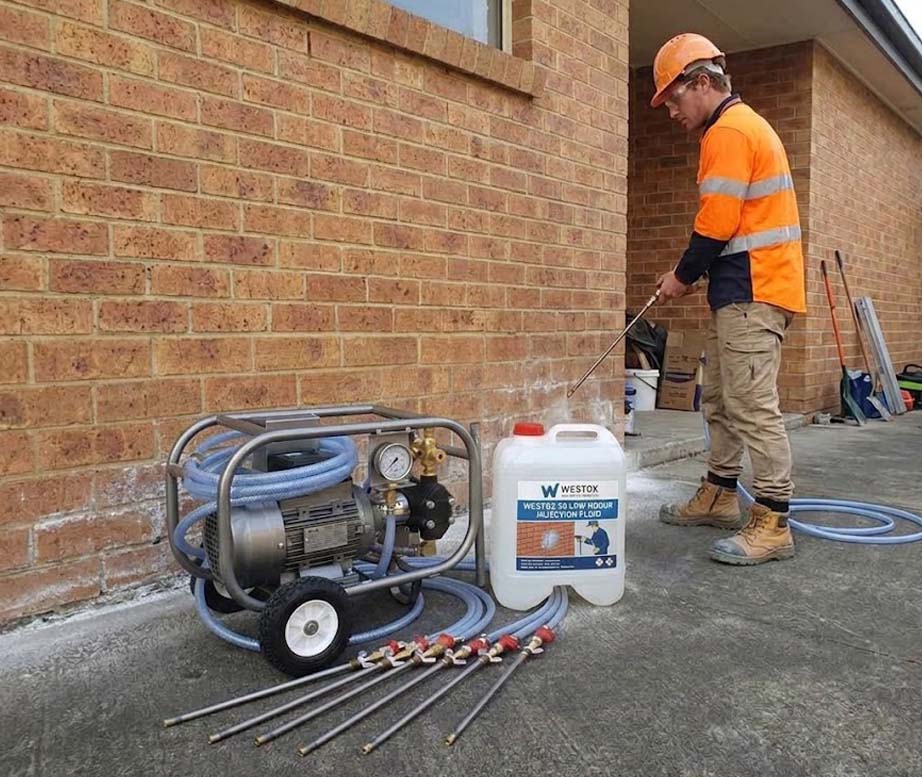
Professional Efflorescence and Rising Damp Treatment
When efflorescence is caused by rising damp, repeatedly cleaning the brickwork will only provide a temporary result. Ground moisture must be prevented from continuing to travel upward through the masonry.
Depending on the building and the cause of the problem, rising damp treatment may include:
- Installing a chemical damp-proof course into the mortar bed
- Removing materials that are bridging the existing DPC
- Lowering soil, garden beds or paving that sits above the DPC
- Improving drainage around the property
- Treating salt-contaminated brickwork
- Removing damaged plaster or render
- Re-rendering with a compatible, breathable system once the wall has sufficiently dried
A chemical DPC forms a water-resistant barrier within the wall, helping stop ground moisture from rising through the brickwork.
For Gold Coast homes experiencing recurring dampness around the bottom of internal or external walls, a proper rising damp assessment can help determine whether DPC treatment is required or whether another moisture source is responsible.
4. Waterproof Brick Walls Against Lateral Water Penetration
If water is entering horizontally through a basement, retaining wall or other below-ground brickwork, brick membrane waterproofing may be the more appropriate solution.
Where access allows, positive-side waterproofing is generally preferred. The waterproofing membrane is installed on the side of the wall exposed to the water, stopping moisture before it can penetrate the masonry.
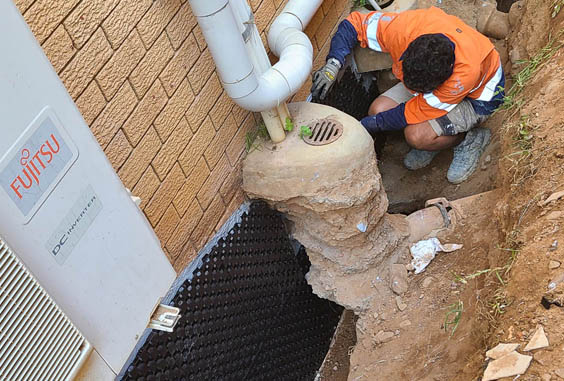
External brick waterproofing
A typical external waterproofing repair (positive-side waterproofing) may involve:
- Excavating to expose the affected wall
- Cleaning and preparing the substrate
- Repairing cracks and deteriorated mortar joints
- Sealing penetrations and construction joints
- Applying a compatible waterproofing membrane
- Installing membrane protection or drainage boards
- Installing or improving subsoil drainage
- Backfilling with suitable drainage material
Where external access is not practical, negative-side waterproofing may be considered. This involves applying a suitable waterproofing system to the accessible internal face of the wall. Because water pressure remains behind the wall, substrate preparation and product selection are particularly important. The brick wall waterproofing system must be designed to withstand negative hydrostatic pressure.
Actively leaking cracks, penetrations and joints may also require polyurethane injection or specialised joint sealing before the main waterproofing system is applied.
5. Let the Brickwork Dry Before Repainting or Rendering
Once the moisture problem has been repaired, the wall needs time to dry.
Applying paint, render or an impermeable sealer over damp, salt-contaminated brickwork can trap moisture and lead to further damage, including:
- Recurring efflorescence
- Bubbling, flaking or peeling paint
- Crumbling mortar joints
- Damaged render or plaster
- Spalling or deteriorating brick faces
- Mould growth
- Persistent damp or musty odours
Drying times will vary depending on the amount of moisture in the wall, its thickness, ventilation and environmental conditions. Once sufficiently dry, replacement render, plaster, paint or other coatings should be compatible with both the masonry and the brick waterproofing or rising damp treatment that has been installed.
Choosing the Right Efflorescence Treatment
| What You’re Seeing | Likely Cause | Recommended Treatment |
|---|---|---|
| Efflorescence concentrated around the bottom of the wall | Rising damp | Chemical DPC, salt treatment and drainage correction |
| Horizontal tide marks with peeling paint or plaster | Rising damp with salt contamination | DPC injection, desalination and compatible re-rendering |
| Dampness across a basement or below-ground wall | Lateral groundwater penetration | Positive-side or negative-side membrane waterproofing |
| Moisture becomes noticeably worse after rain | Penetrating damp or failed waterproofing | Crack repairs, repointing, drainage improvements and waterproofing repairs |
| Water is entering through specific cracks or joints | Localised water leakage | Polyurethane injection or specialist joint sealing |
| Efflorescence keeps returning after cleaning | Ongoing moisture problem | Moisture investigation followed by appropriate remedial waterproofing |
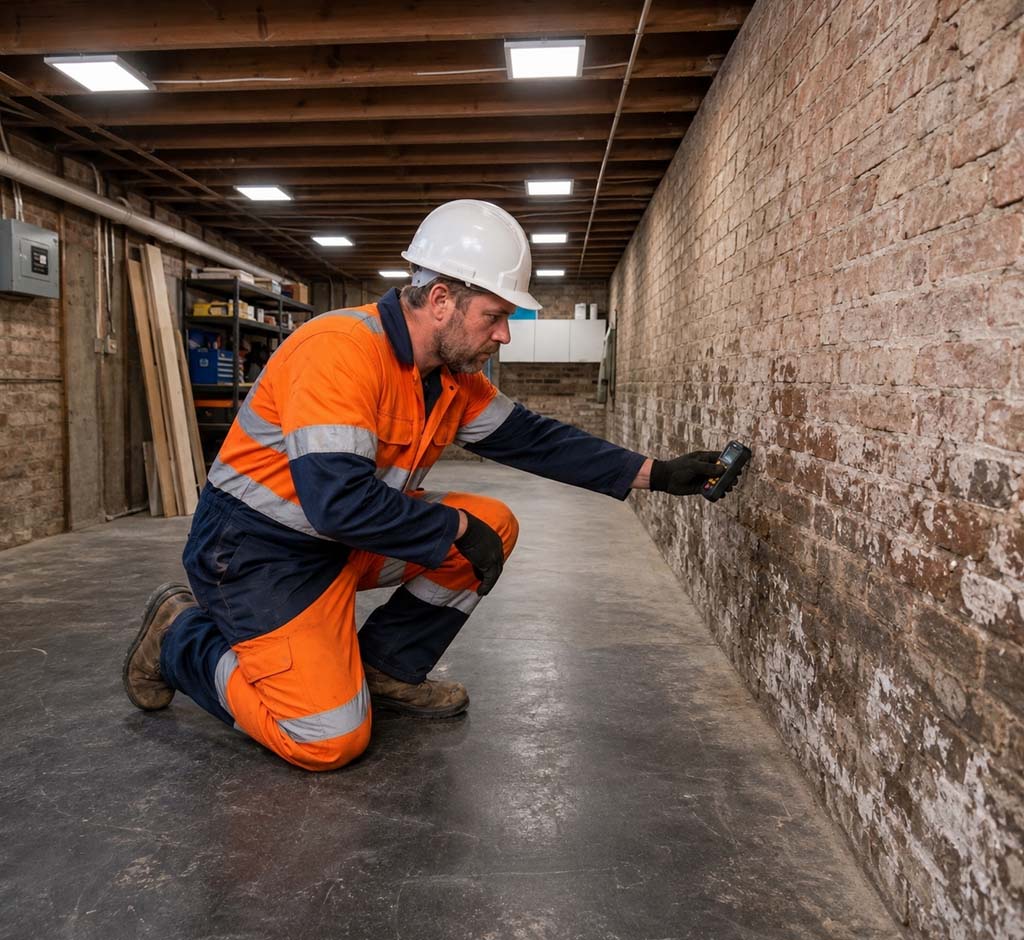
Rising damp inspections
The Right Way to Treat Efflorescence
For a lasting result, efflorescence treatment should address both the visible salt deposits and the moisture problem behind them.
A complete treatment generally involves:
1. Identifying where the moisture is coming from and how it is moving through the brickwork.
2. Repairing leaking pipes, cracks, failed mortar, drainage problems or damaged brick waterproofing.
3. Installing a chemical damp-proof course where rising damp is confirmed or contact us for complete solutions.
4. Applying brick waterproofing (positive-side membrane waterproofing) where lateral water penetration is the cause.
5. Removing visible efflorescence and treating deeper salt contamination.
6. Allowing the brickwork sufficient time to dry.
7. Reinstating mortar, render, plaster or paint with compatible materials.
Need Help With Efflorescence or Damp Brickwork on the Gold Coast?
Efflorescence is often the symptom rather than the actual problem. If the white deposits keep returning, there is usually an ongoing source of moisture that needs to be identified and repaired.
A professional waterproofing assessment can determine whether the issue is rising damp, leaking brickwork, poor drainage, hydrostatic pressure or a failed waterproofing system. From there, the right solution may involve leak repairs, damp-proof course installation, crack injection, brick wall waterproofing or membrane waterproofing.
Addressing the moisture at its source gives you a much better chance of protecting the brickwork and preventing the same problem from returning. Contact us now!